Get Full Government Meeting Transcripts, Videos, & Alerts Forever!
Get email alerts on the Administration Permitting topic
No spam. Unsubscribe anytime.
Planning board considers procedural overhaul: digital portal, checklists and subdivision updates
Summary
Board members reviewed a draft that centralizes submission checklists outside the regulations, aligns subdivision rules with state vesting and completeness standards, and discussed how a new state online portal will accept applications; staff will refine checklists and coordinate portal integration.
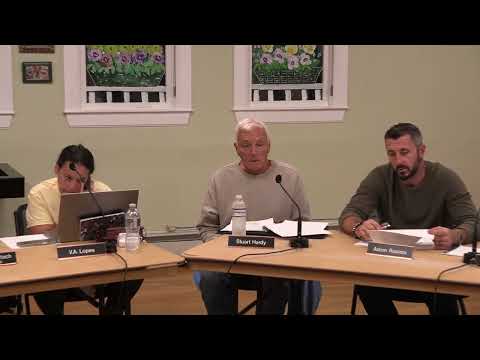
At the Sept. 25 special workshop the Tiverton Planning Board reviewed proposed administrative changes to the subdivision and development-plan regulations, including how checklists and forms will be published and how a new state online portal will be used to receive applications.
Key points
Checklists moved by reference: Staff proposed removing long, embedded checklists from the body of the regulations and instead referencing named checklists and forms that will live as administrative documents. Counsel and staff confirmed the checklists will be mandatory by reference in the regulations, meaning applicants must provide the items the checklist requires even if the checklist itself is maintained outside the ordinance text.
Portal submission and technical limits: The board discussed the state’s new online permitting portal. Planner Ashley Sweet told the board the portal will function primarily as a mechanism to receive electronic submissions and that Tiverton will continue to require signed forms. The portal vendor’s current configuration does not support all conditional-checklist logic; staff said the system will accept uploaded PDFs and that the town will iterate on the portal configuration as experience grows.
Completeness and vesting: The draft clarifies when an application is “substantially complete” and links that determination to a formal certificate of completeness (a change intended to remove ambiguity about vesting dates for projects). Counsel said the revisions seek to fix problems the town has seen where “substantially complete” was used but not consistently defined.
Mergers and smaller boundary edits: Staff flagged a provision allowing administrative mergers and noted the board may want a two-tier administrative subdivision (one simple merger flow with relaxed survey standards and another for line moves) to reduce expense and timeline for applicants making minor changes.
Practical submission requirements: Board members emphasized the need for clear file-naming conventions and short-form checklists to reduce staff time spent renaming and searching PDFs. Staff agreed to prepare suggested file-naming guidance and to split some checklists to match the draft’s two-phase development plan-review process.
Next steps: Staff will consolidate the zoning and subdivision edits, finalize checklist formats and identify how selected items will be published on the portal. The board expects another workshop and a formal packet for public hearing.
Ending: The procedural changes are intended to improve administrative efficiency and transparency; board members asked staff to make the checklists concise and user-friendly so that compliance is straightforward for applicants and easier to verify by staff.