Get Full Government Meeting Transcripts, Videos, & Alerts Forever!
Get email alerts on the Carbon Sequestration Ban topic
No spam. Unsubscribe anytime.
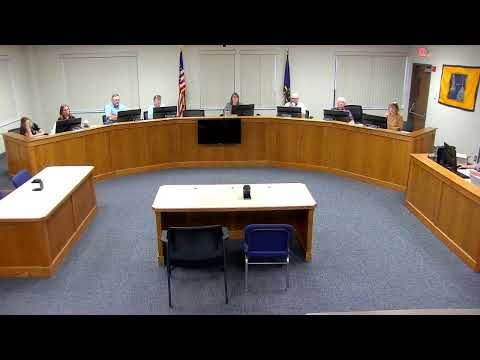
Planning commission recommends county commissioners consider ordinance banning carbon sequestration activities
Summary
The Marshall County Planning Commission voted to forward a proposed ordinance to the county commissioners that would ban carbon dioxide capture, transport and subsurface storage within the county, adding railroad transport by amendment; the measure is intended as a local zoning control and will be considered by the commissioners.
The Marshall County Planning Commission voted to recommend that the county commissioners adopt an ordinance banning carbon sequestration activities — including compression, liquefaction, transport and subsurface storage of captured carbon dioxide — within Marshall County, and amended the draft to explicitly include rail transport.
Planning staff presented an ordinance (identified in the meeting as Ordinance No. 2025-21) that would amend the county zoning ordinance to prohibit carbon sequestration uses in all zoning districts, add definitions for carbon dioxide, injection wells, carbon dioxide plumes and storage facilities, and bar subsurface carbon dioxide pools and expansions into county territory without specific authorization.
Nicholas (Nick), planning staff, told the commission that the technology is “an unproven, emerging technology” with “inconsistent scientific evidence and results,” and that some projects elsewhere have led to safety problems, including serious incidents. The staff report said county leaders and the public had raised concerns about potential risks to life, drinking water and farmland and cited uncertain state pipeline and transport regulations.
Commission discussion touched on legal exposure if the county adopted an outright ban and the state later enacted different rules or used eminent domain. One commissioner urged a stricter ordinance rather than a ban to reduce the risk of provoking state action; another said the ban had been used by other Indiana counties and in some cases led to state-level eminent domain or court actions. The commission’s attorney and the commissioners’ attorney reviewed the draft before presentation, staff said.
A member moved to recommend the ordinance to the Marshall County Commissioners with a modification to include railroad transport in the ban; the motion was seconded and passed on roll call. Planning staff said the commission will make the draft available for public review and that the commission expects to take the ordinance to the county commissioners at the second meeting in September for their consideration.
Staff and some commissioners emphasized that a local ban would make the county’s stance clear but would not necessarily prevent future projects if state law or eminent domain authority later applied; that possibility was raised repeatedly in discussion.
The ordinance as presented references state statutes and federal permitting programs in its definitions (the draft cites UIC Class VI permits in defining storage facilities). The commission recommended forwarding the draft ordinance and the record of its public hearing to the county commissioners for their action.