Get Full Government Meeting Transcripts, Videos, & Alerts Forever!
Get email alerts on the Energy Storage topic
No spam. Unsubscribe anytime.
Solano supervisors amend county moratorium on battery energy storage systems after public safety and farmland concerns; 5-0 vote
Summary
The Solano County Board of Supervisors on an item heard early in the meeting voted unanimously to adopt staff recommendations amending the county's temporary moratorium on battery energy storage systems (BESS).
The Solano County Board of Supervisors on an item heard early in the meeting voted unanimously to adopt staff recommendations amending a county moratorium on battery energy storage systems (BESS). The board recorded a 5-0 vote in favor of the staff recommendations.
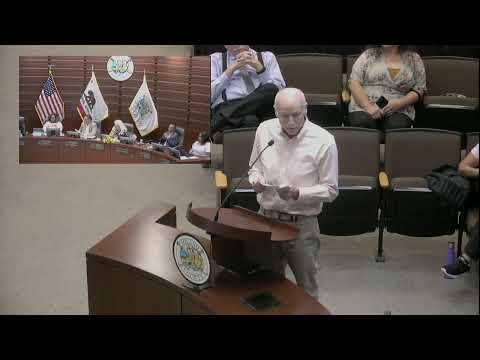
Residents who live near a proposed NextEra BESS project at Kilkenny and Burns Road urged supervisors to tighten siting limits and exclude agricultural land from BESS development. Many speakers said lithium-ion battery sites pose risks they described as immediate and long term — including fire, toxic gas emissions and soil contamination — and cited the Moss Landing incident as an example.
The concerns animated public comment from local farmers and residents. Farmer Dan Buzos said he lives about one parcel from the proposed site and called the projects “bad, bad, bad,” adding that, “as an almond farmer I’m really concerned about contamination” from operations that could affect soils and crops. A caller identified as Felicia Minyon urged the board to exclude agricultural land from the ordinance and to impose stronger financial assurances and insurance underwriting standards for developers and banks that back letters of credit. Another speaker warned that toxic gases and soil contamination at Moss Landing had reached estuary areas several miles away and urged larger setback distances from homes, schools and Travis Air Force Base.
Supporters of the staff-recommended amendment said it would tighten the county’s temporary moratorium and protect agricultural lands and residential areas while staff and the board develop longer-term policy. Dr. Carmen Martinez Calderon, who said she lives three doors from the proposed Corby project site, urged the supervisors to adopt the amendments and then make them permanent, saying “this is not an issue that is gonna go away overnight.”
Supervisor Vasquez moved to “adopt and accept staff’s recommendations.” The motion was seconded and the board approved the staff recommendation by a 5-0 roll-call vote, after which the chair announced the order of the vote. The transcript records the vote as “So ordered by a vote of 5 0.” The transcript does not show a separate named motioner for the second or additional amendments; the formal motion language recorded on the floor was the adoption of staff recommendations as presented.
Nut graf: The supervisors’ action implements an interim tightening of county rules on siting and review of BESS projects after sustained community concern about fire risk, emissions and impacts on agricultural land. The vote does not by itself adopt a permanent ordinance; speakers at the hearing urged the board to pursue lasting protections, and several callers asked that the county place stricter financial guarantees and setback standards into permanent law.
In the discussion preceding the vote, callers and in-person speakers repeatedly raised three specific concerns: (1) the risk of thermal runaway and fires at lithium-ion storage sites; (2) possible release of toxic gases and contamination of soil and waterways (several speakers referenced Moss Landing); and (3) proximity to homes, schools and Travis Air Force Base, with at least one speaker saying a three‑mile buffer is insufficient. Several residents argued the projects do not deliver the claimed benefit of storing “excess” local renewable energy and said the proposed sites would be charged from the grid.
Speakers asked for detailed financial and insurance safeguards. Caller Felicia Minyon requested that banks providing letters of credit be federally insured and maintain investment‑grade ratings and that insurance policies cover incidents such as thermal runaway. Multiple callers urged the board to exclude prime agricultural and commercial zones from BESS siting and to direct staff to draft a permanent ordinance that enshrines those protections.
The action recorded in the public transcript is limited to adoption of staff recommendations; the transcript does not record additional formal amendments or a detailed implementation schedule. Several supervisors indicated they wanted close follow-up with staff: one supervisor asked for meetings to review proposed safety studies and “pools” for insurance or financial assurance language before subsequent decisions.
Ending: Supporters of the amendments urged the board to move quickly toward a permanent ordinance that would retain the stricter siting, insurance and financial-assurance language requested during public comment. The transcript shows board consensus to continue staff work on these issues and to return with additional details, but the record does not list a precise timetable for permanent ordinance drafting or final adoption.