Get Full Government Meeting Transcripts, Videos, & Alerts Forever!
Get email alerts on the Public Safety Forensics topic
No spam. Unsubscribe anytime.
Coroner warns DNA lab funding will run out within two years after millage expiration; urges new millage or alternative revenue
Summary
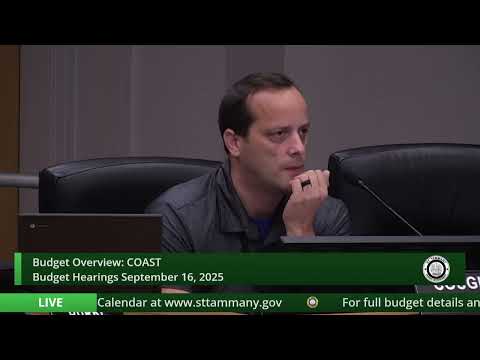
Dr. Christopher Tait, the St. Tammany Parish coroner, told councilors the coroner millage ended in 2024 and that remaining dedicated funds will be exhausted in about two years; he said the parish’s in‑house DNA lab speeds investigations and that staffing losses have created a backlog.
Dr. Christopher Tait, St. Tammany Parish coroner, told councilors the coroner’s dedicated millage ended in 2024 and that the office’s remaining ad valorem and earned revenues will sustain operations for “about two years” if no new revenue source is secured. “DNA solves crime and is instrumental in prosecuting criminals,” Tait said, urging the council to consider funding options to maintain the DNA lab and autopsy capacity.
Tait said the coroner’s office currently performs many death investigations and handles a significant volume of commitments and cremation permits; he provided counts for 2024 operations and said he personally performed about 295 autopsies in a recent year. He said the office covers DNA testing for local law enforcement without charging municipalities and that the in‑house lab can return some results in roughly 30 days, far faster than the state reference lab’s turnaround he described as closer to a year for nonurgent cases.
Tait warned that staffing losses in the DNA lab — three analyst vacancies — are the primary reason for a backlog of St. Tammany cases. He said recruiting forensic pathologists is difficult because of limited fellowship training slots nationally and competition for experienced specialists. He described the coroner’s office’s efforts to cut costs, including replacing salaried forensic psychiatrists with contracted specialists and other administrative changes that reduced roughly $1,000,000 in salaries while keeping services.
A representative from the District Attorney’s office and coroner finance staff told the council there is pending litigation over ad valorem tax money, and the district attorney advised against commenting on the litigation’s status; the coroner’s financial lead said a budget amendment may be required if expected tax receipts are not received. Tait and his staff discussed the possibility of asking the parish to place a renewal millage on a future ballot; Tait said a millage “around 2.5” mills was a ballpark estimate discussed internally but emphasized formal proposals would require further parish action and legal steps.
Ending: Coroner staff asked for council guidance on funding options and said they will continue to try to preserve services and seek alternatives; councilors and coroner staff agreed to follow up on potential timing for placing a millage question on the ballot.