Get Full Government Meeting Transcripts, Videos, & Alerts Forever!
Michigan LEO outlines nonprofit grant process; lawmakers press for transparency and data
Summary
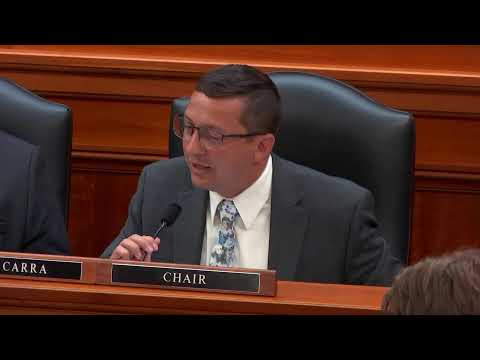
The House Oversight Subcommittee on Corporate Subsidies and State Investments heard from officials of the Michigan Department of Labor and Economic Opportunity about how the agency awards and monitors grants to nonprofits, local governments and businesses, and asked the department to provide more detailed dollar amounts, program outcomes and grant documents.
The House Oversight Subcommittee on Corporate Subsidies and State Investments heard a presentation on the Michigan Department of Labor and Economic Opportunity(LEO) grants process and its relationships with nonprofit recipients, followed by a line of questions from committee members about transparency, timelines and targeted grant language.
LEO Senior Chief Deputy Director Jonathan Smith and Jayshanna Hicks, director of legislative affairs for LEO, told the subcommittee the department oversees a mix of formula, competitive and legislative-directed grants and monitors recipients for compliance. "Our mission at LEO is to expand economic opportunity and prosperity for for everyone in Michigan," Smith said during his opening remarks.
Why it matters: LEO administers hundreds of millions of dollars statewide and uses different award methods that carry different oversight and reporting requirements. Committee members pressed LEO on how grants are targeted, how recipients are vetted and how the department enforces spending rules when grants are advanced instead of reimbursed.
Smith summarized LEO's grant portfolio and process. He said LEO's accounting shows 22% of grant dollars going to other governments, 15% to schools and universities, 40% to nonprofits and 24% to for-profits, while noting that accounting conventions can blur where funds ultimately land (for example, some business-directed Going Pro Talent Fund awards pass through local Michigan Works agencies and are recorded as nonprofit recipients). Smith said 26% of LEO grants are distributed by formula (largely federally directed), about 46.5% are distributed through competitive requests for proposals, and roughly 27.5% are issued without a competitive process, mostly legislative enhancement grants.
Smith pro…
Already have an account? Log in
Subscribe to keep reading
Unlock the rest of this article — and every article on Citizen Portal.
- Unlimited articles
- AI-powered breakdowns of topics, speakers, decisions, and budgets
- Instant alerts when your location has a new meeting
- Follow topics and more locations
- 1,000 AI Insights / month, plus AI Chat