Get Full Government Meeting Transcripts, Videos, & Alerts Forever!
Get email alerts on the Arkansas Casino Litigation topic
No spam. Unsubscribe anytime.
Cherokee Nation Businesses says federal judge sided with Arkansas in casino-license dispute; appeal expected
Summary
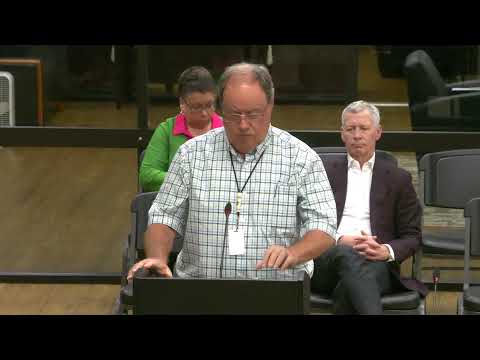
Chuck Garrett, chief executive officer of Cherokee Nation Businesses, told the Cherokee Nation Executive and Finance Committee that a federal judge in Arkansas ruled for the state on all counts in a case the Nation brought over a casino license, and he said lawyers were preparing an appeal to the Eighth Circuit.
Chuck Garrett, chief executive officer of Cherokee Nation Businesses, told the Cherokee Nation Executive and Finance Committee that a federal judge in Arkansas ruled in favor of the state on all counts in a case the Nation brought over a casino license.
Garrett said his legal team received the judge’s order the morning of the meeting and had not yet completed a written review; lawyers were meeting to analyze options. “The punch line is that we… he sided with the state of Arkansas on each count,” Garrett said.
The Nation’s challenge included takings and due-process claims, Garrett said. He described the takings argument this way: when government removes a previously granted property interest, the owner is entitled to just compensation. Garrett said that argument remains open for appeal and his team expects to pursue further court review.
“If you put it in a real-estate analogy…if the county decides to put a road across it, they can do it, but they’ve got to pay you for it,” Garrett said. “A license, similarly, is considered [a] property right…and that was taken from us.”
Garrett told the committee the Nation had two business motives for the Arkansas effort: to compete for casino business in the state and to protect Cherokee Nation assets at West Siloam and Roland from new competition on Arkansas’s western border. He said the loss of the license would expose Cherokee Nation Businesses to tens of millions of dollars in annual revenue risk if competitors enter adjacent Arkansas markets.
Garrett described the litigation as a multi-year fight and said the Nation’s lawyers were preparing for appeal. He initially misstated the appellate court but corrected himself: should an appeal be filed, it would go to the U.S. Court of Appeals for the Eighth Circuit in St. Louis. Garrett said he expected the Nation would likely appeal.
Committee members asked about remedies and next steps. Councilor Gabriel asked whether the Nation would appeal; Garrett and legal staff indicated the appeal route was under active consideration and that some constitutional-law arguments — notably the takings claim — still appeared viable.
Garrett framed the dispute as consequential for Cherokee Nation enterprise revenues and for funding the Nation’s programs in education and health care, noting those stakes as part of the rationale for pursuing the case. He said the litigation reflects the organization’s willingness to pursue legal remedies when it believes property rights and business assets are at risk.
The committee did not take a formal vote on litigation strategy during the meeting; Garrett said lawyers were meeting and would report back once they completed their analysis.