Get Full Government Meeting Transcripts, Videos, & Alerts Forever!
Get email alerts on the Elections And Ethics topic
No spam. Unsubscribe anytime.
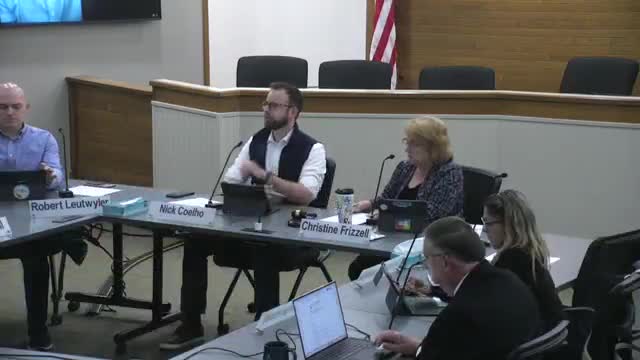
Lynnwood council debates clearer residency and multiple‑office rules; staff to return with revised language
Summary
Councilmember Decker presented draft amendments on Sept. 2 meant to clarify who is eligible to hold Lynnwood office and to remove ambiguous residency language that the council and staff said has led to disputes in other jurisdictions.
Councilmember Decker presented draft amendments on Sept. 2 meant to clarify who is eligible to hold Lynnwood office and to remove ambiguous residency language that the council and staff said has led to disputes in other jurisdictions.
The draft would require council members to reside in Lynnwood for the duration of their term but would permit an up‑to‑60‑day exception for “extreme hardship” during a four‑year term. It also would require any council member elected or appointed to another paid elective public office to resign or have the city position vacated when the new term begins. Staff said City Attorney Lisa Marshall reviewed the language and had no legal concerns with the draft as presented.
Why it matters: ambiguous residency and eligibility language can lead to legal challenges, which council members said can be costly and disruptive. Council members cited recent disputes in nearby Everett as an example of how unclear code can trigger lawsuits and uncertainty about who may lawfully hold office.
Discussion highlights
- Hardship clause and enforcement: Several council members asked who would determine whether a reported hardship qualified, how the 60‑day total would be tracked and whether the provision would be enforceable in the event of a disaster (for example, if a large‑scale event forced residents out of the city). Staff said the council had previously requested removing an enforcement mechanism from the draft; that removal means the community would have to challenge eligibility in cases where residency is disputed.
- Renters vs. homeowners: Council members raised that verification mechanisms (leases vs. mortgage records) operate differently for renters and homeowners and warned the code should not indirectly disadvantage renters. Other members said affadavits and existing voter‑registration processes (auditor/registrar channels) provide established mechanisms for community challenge.
- Holding multiple offices and employees running for office: Staff clarified the draft does not prohibit a city employee from running; it only requires an employee to resign city employment if they take a separate paid elective public office. Council members discussed whether to phrase the prohibition in terms of an automatic vacancy when another paid elective office begins and whether to name exceptions (for example, quasi‑municipal boards appointed because one is a sitting elected official).
Next steps
No vote was taken. Council members asked staff to revise the draft to address clarity concerns (definition or process for hardship, the timing of vacancy if someone assumes another office, and language to avoid unintended effects on employees and candidates). The revised language will appear in a future packet for further review.