Get Full Government Meeting Transcripts, Videos, & Alerts Forever!
Get email alerts on the Rural Lived Experience And Legislation topic
No spam. Unsubscribe anytime.
Rural transgender elected official recounts harassment, calls for stronger state protections and enforcement
Summary
Stephanie Fritch, an out transgender elected official from rural Pennsylvania, told the York town hall she and other rural trans residents face daily threats, discrimination and limited access to services. She said a discrimination complaint she filed years ago was dropped after three years and urged state-level legislation and local organizing.
York City
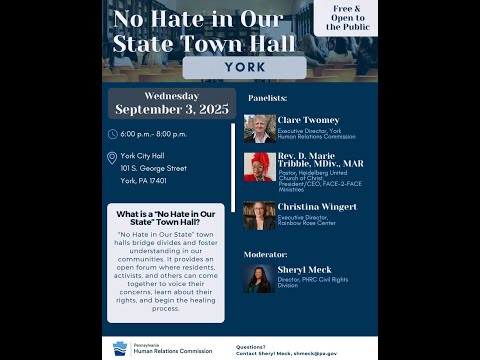
At a Pennsylvania Human Relations Commission town hall in York, Stephanie Fritch, an elected transgender woman from rural Pennsylvania, described sustained harassment, limited local resources and a stalled discrimination complaint that she said left her without closure.
"World people don't have their voices heard ever. They live outside the safety bubble every day. There's no safe place. There's no resources. They live in poverty and face risk discrimination daily," Fritch said, identifying herself as an out transgender elected official who represents a small rural township.
Fritch told the meeting she filed a discrimination complaint with the commission more than six years ago that was dropped after about three years, and she said she felt the outcome denied her closure. She also described difficulty accessing law enforcement and federal assistance when she faced threats, and said rural trans residents often lack transportation, health care access and basic economic stability.
She urged stronger state-level protections and called for civil remedies in addition to criminal enforcement. "I think hate crimes at any level should be also adjudicated on the civil level," she said, and encouraged constituents to run for local office and to write representatives as a strategy for protection and political change.
Why this matters: Fritch''s testimony illustrates barriers in rural communities: lack of local resources, limited trust in police and federal partners, difficulties sustaining complaints and acute economic vulnerability. Panelists at the meeting suggested concrete local steps''collective letter-writing, petitions and outreach to school boards and elected officials''in addition to pressing for state statutory change.
The meeting audience also raised state bills (HB 300 and SB 150) and asked how residents can support passage of legislation; organizers said the immediate step is to sign the York petition, contact local representatives and attend public hearings on school or council items.
Fritch said she will remain publicly engaged and urged others to write their representatives and organize locally: "If you get enough votes, you will become an elected person. And that's what I did in a small town."