Get Full Government Meeting Transcripts, Videos, & Alerts Forever!
Get email alerts on the Community Safety And Allies topic
No spam. Unsubscribe anytime.
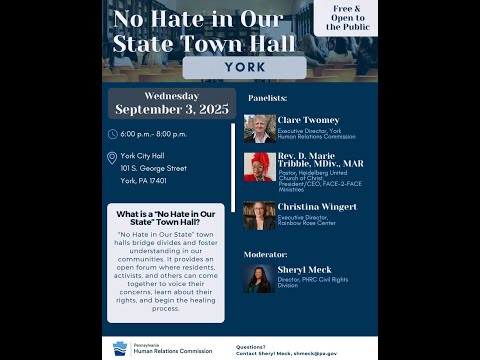
Faith leaders, advocates and students outline local strategies to protect LGBTQ residents and students
Summary
At the York town hall, clergy, advocates and state officials urged faith communities and allies to act publicly and covertly: open welcoming congregations, allyship commitments, school-level support networks and subversive outreach to bypass hostile school boards.
York City
Faith leaders, community advocates and state officials used a Pennsylvania Human Relations Commission town hall in York to set out local strategies to protect LGBTQ residents and students, calling for visible allyship, faith-based welcome, and discreet networks to get resources to vulnerable young people in hostile school districts.
"If you follow me on Facebook, you know I always end my post by saying another world is possible. It's gonna happen because of what people in this room do," said Reverend Jesse North, pastor of Wrightsville Presbyterian Church, urging congregations to publicly declare welcome and to reach into school and civic spaces.
Reverend Dee Marie Tribble, a pastor and family therapist, described faith-based reconciliation and urged church leaders not to stay silent. "What I say to people who believe that faith and LGBTQIA cannot coexist is you are interpreting your sacred texts based on your own biases," she said. Tribble said faith communities should prioritize "love" and support for families navigating identity.
Panelists and audience members also described tactical approaches for schools: creating safe, low-profile points of contact inside schools, backing student-led GSAs with outside safe spaces, and cultivating allies who can use their positional privilege to open doors for young people. State commission staff and local groups said training for school staff, police liaisons and boards is part of the mix.
Several speakers recommended both public affirmations and covert organizing. "We have to become experts in how we communicate subversely," Toomey said, arguing that some outreach and networks must operate quietly where school boards have been infiltrated.
Why this matters: Speakers emphasized that a mix of visible allyship (publicly welcoming congregations, training and petitions) and low-profile support (covert networks, safe handoffs to community centers) helps protect students who cannot safely be visible in their school districts.
Faith and community organizations at the meeting offered to host trainings and to act as liaisons; organizers said interfaith networks are being developed to provide on-site support for families at tense school-board meetings and rallies.