Get Full Government Meeting Transcripts, Videos, & Alerts Forever!
Get email alerts on the Settlement Disclosure topic
No spam. Unsubscribe anytime.
Council posts settlement agreement; resident calls for removal of utility charge and questions department accountability
Summary
The council received and filed a closed‑session settlement disclosure; a public commenter criticized the size of recent settlements and asked when a fee on utility bills would be removed.
The Redlands City Council voted to receive and file a settlement agreement approved in closed session addressing a lawsuit titled Julie C. Alvarado Salcedo v. City of Redlands (San Bernardino County Superior Court case CI V SB2218452).
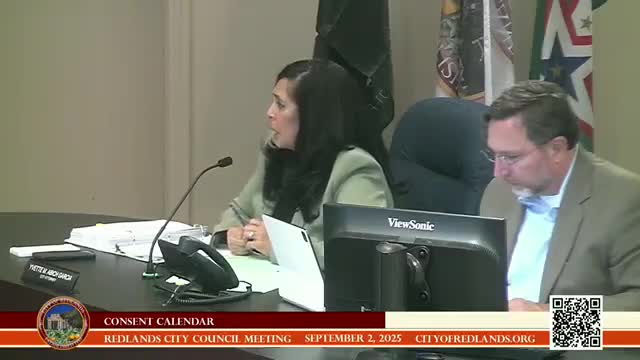
The council's city attorney said the item was placed on the open‑session agenda to comply with the Redlands Municipal Code, which requires posting of settlements approved in closed session. There was no additional action taken in open session beyond the receipt and filing of the document.
During public comment, Steve Rogers of Church Street, who identified himself as a party in a separate litigation (Rogers et al. v. City of Redlands), criticized the city's handling of recent employment‑related settlements and asked when a fee being charged on utility bills — which he said had been “deemed illegal” — would be removed. Rogers also expressed concern that the city manager had not been given written goals and objectives at the start of his tenure and urged the council to adopt measurable objectives for the manager’s new performance review.
The council's recorded vote to receive and file the settlement was yes from Council member Barich, Council member Davis, Mayor Pro Tem Shaw and Mayor Salcedo; the closed‑session report stated there were no reportable actions and that Council member Tejeda was absent during closed session.
Why it matters: Settlement disclosures inform the public about legal liabilities and use of public funds; the question raised about a utility charge and the process for executive performance evaluations points to ongoing public scrutiny of administrative practice and oversight.
What the record shows: The city attorney described the posting requirement; the document is available as a public record, per the attorney's remarks. Rogers spoke publicly after the council reported that closed session produced “no reportable action.”
No further council action on the topics raised during public comment was recorded at the meeting.