Get Full Government Meeting Transcripts, Videos, & Alerts Forever!
Get email alerts on the Land Development Code topic
No spam. Unsubscribe anytime.
Sedona planning commission narrowly recommends LDC changes to comply with state law; commissioners press for stronger public notice and limits on short‑term‑re
Summary
The Sedona Planning and Zoning Commission voted on Sept. 2 to recommend City Council approve Land Development Code revisions implementing Arizona House Bill 2447 and other clarifications, but commissioners pressed staff to expand notice, tighten temporary‑event rules for short‑term rentals and clarify massing and kitchen rules.
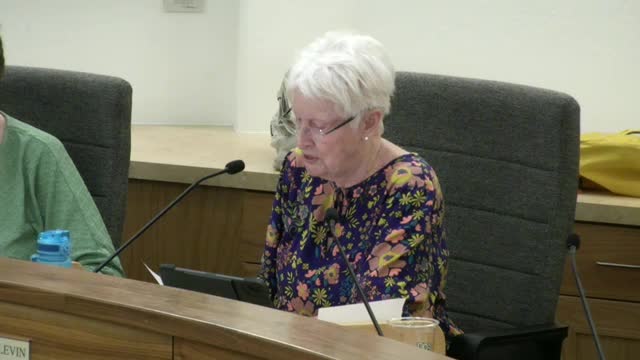
The Sedona Planning and Zoning Commission voted on Sept. 2 to recommend that City Council approve revisions to the Sedona Land Development Code, including changes required by Arizona House Bill 2447 that move many development and subdivision reviews to an administrative process. The motion to forward Case PZ-25-00009 passed with four votes in favor and three opposed, after extended public comment and detailed commissioner discussion.
Commissioners and staff framed the proposals as a mixture of state-mandated changes and staff-housekeeping clarifications. Carrie, a city planning staff member, told the commission, “I want to emphasize that these are not these ones are not being proposed by staff other than we are doing them because the state told us we have to.” The packet before the commission included definition clarifications, changes to appeal procedures, and the larger change required by HB 2447 to allow administrative (staff-only) review for many development review and subdivision applications.
Commissioners, residents and at least one signer of the public comment card pressed staff on several policy consequences. Multiple speakers said the shift to administrative review will remove a public hearing forum that the community has used to offer design input, ask questions and resolve misinformation. Commissioners asked staff how public input will be collected and considered under the new process; staff described retaining existing notice methods (property posting, mailed notices within a radius and a newspaper notice) and the current administrative practice of giving at least 15 days for written comments on projects that would be reviewed administratively. Staff said comments received would be reviewed by the director before a final decision and those who submitted comments would be notified of the decision and advised of appeal rights.
The commission debated several specific code topics included in the packet:
- Temporary uses and special events tied to short‑term rentals. Staff clarified that properties operating as short‑term rentals are ineligible for temporary use permits (TUPs) for events such as wedding receptions; Carrie said, “if it is a short term rental, they cannot. They are not eligible to get that permit.” Commissioners asked staff to tighten definitions so businesses (for example, restaurants) and commercial zones are explicitly allowed to host wedding receptions or similar events, while limiting such events in residential zones and in properties listed as short‑term rentals. Commissioners also asked the staff to consider explicitly listing “classes and workshops” and “other wedding‑associated activities” where appropriate.
- Kitchens and accessory units. The amendments clarify that each dwelling may contain a maximum of one kitchen, with accessory dwelling units (ADUs) approved as separate dwelling units allowed to have their own kitchens. Staff explained a kitchen is defined in the code as having a sink, refrigerator and a stove; a kitchenette (sink and refrigerator without a full stove or dedicated gas/electric line) remains allowed. Commissioners raised potential religious accommodation issues (for example, observant households that sometimes maintain separate kosher preparation areas) and were told federal protections such as the Religious Land Use and Institutionalized Persons Act could be applicable in specific cases.
- Building massing and diagrams. Architects on the commission asked for clearer diagrams and wording on building massing and the definition of a “space void” so the code’s dimensional standards are easier to interpret; staff agreed to revise diagrams and to clarify language about how voids are measured.
- Thresholds and review process. The packet lowers the square‑foot thresholds used to distinguish major from minor development review (the staff report tied the change to HB 2447 and to Sedona’s existing minor development review process). Staff said the administrative review procedure being applied to those projects would follow the same public notification and submission timelines currently used for projects between 2,000 and 5,000 square feet.
- Public notice radius and city projects. Commissioners and members of the public strongly urged the commission and staff to expand the mailed-notice radius beyond the statutory 300 feet; multiple speakers suggested at least 500 feet (some suggested 600). Staff noted the cost of larger mailings and agreed to provide council with estimated cost impacts. Commissioners also asked that city‑initiated projects (where the city is the applicant) receive broader or citywide notification, and discussed whether the city could underwrite expanded notice for such projects.
Public comment included one registered speaker, Sedona resident Tim Perry, who said staff had presented only “housekeeping changes” and urged the commission to send the proposal back for stronger implementation of HB 2447 provisions such as a self‑certification program for licensed design professionals. Staff said the draft before the commission did not propose a self‑certification program; staff explained such programs can be optional under state law and that the city was not proposing to implement self certification at this time.
Commissioners also sought clarity on appeals under the new process. Staff and the city attorney explained that administrative approvals would still be subject to appeal; appeals of director decisions would come to the Planning and Zoning Commission and could be further appealed to City Council and superior court. Staff reminded the commission that appeals must be based on the code or on the specific grounds listed in the appeal.
Formal action: the commission made a motion to recommend City Council approval of Case PZ-25-00009 (Land Development Code revisions) “consistent with the approval criteria in section 8.6.C.4 of the LDC and the specific amendments brought by the commission.” The motion passed with a 4–3 tally. Commissioners recorded three opposing votes; the record shows Commissioner Smith among the opposing votes and three commissioners registered a negative vote during the roll call of the motion. The commission asked staff to include the commission’s recommended edits and the discussion points (expanded notification, revised wedding/event language, massing diagram updates, cost estimates for broader notice, and a suggested automatic reversion clause if the state law is rescinded) in the report to City Council.
What happens next: The commission’s recommendation goes to Sedona City Council. Staff said it will prepare an ordinance and accompanying materials (including cost estimates for expanded notice and language that would allow the city to revert certain sections automatically if HB 2447 is later rescinded). Council will receive the staff report and the commission’s recorded discussion, and decide whether to adopt, amend or reject the proposed LDC changes.
Commissioners repeatedly emphasized the need for clear timelines for outreach and comment submission, for explicit rules about city‑initiated project notice, and for internal city policies to protect staff and preserve transparency during administrative review.
Ending note: The commission closed the item with instructions to staff to bring the amendments and the commission’s requested modifications forward to council, and to provide estimated notice costs and revised LDC language (massing diagrams, wedding/special events language, and the ADU/kitchen clarifications). The commission will consider the item further at the City Council hearing and in future code update cycles.