Get Full Government Meeting Transcripts, Videos, & Alerts Forever!
Get email alerts on the Public Health Pools topic
No spam. Unsubscribe anytime.
County health staff urges local ordinances to restore pool inspections after state law repeal
Summary
Public-health staff told Bannock County commissioners that a recently repealed Idaho statute removed statewide authority to license and inspect public pools; staff recommended county- or city-level ordinances and a memorandum of agreement designating the public health district as licensor and inspector.
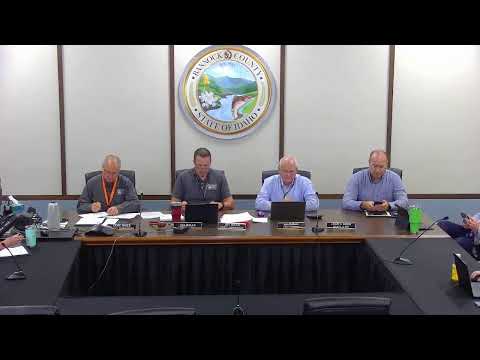
Maggie, a public-health district staff member, told the Bannock County Board of Commissioners on July 30 that a state statute that previously required the Idaho Department of Health and Welfare to license and inspect public swimming pools was repealed earlier this year and that, as of July 1, the district no longer has statewide authority to license or inspect public pools.
Maggie said the district completed its inspections before July 1 but expressed concern that a lapse in routine inspections could increase the risk of communicable-disease spread. She said Oneida County requested a meeting to discuss a county ordinance that would reestablish local authority and that the district’s Board of Health recommended staff meet with each county in the public-health district to explore countywide ordinances.
The draft the district shared with commissioners mirrors the 2024 model aquatic health code and would cover “public” pools—those operated for a fee such as municipal pools—and commercial pools such as hotel or fitness-club pools, which the district said generate most complaints. Maggie also said the district prepared a draft memorandum of agreement under which a county could designate the public-health district as the licensor and inspector, drawing on the district’s experience and epidemiology linkages in the event of an outbreak.
Commissioners and staff said the county must coordinate with cities because many pools, and most motels, sit inside city limits. Commissioners asked staff to meet with the city of Pocatello (a meeting was scheduled the same day) and with other area cities so county and city ordinances would align and not conflict. Commissioners and Maggie discussed drafting exemptions for unique facilities; Maggie suggested a carve-out for the hot mineral pools at Lava, which she said the district has not historically inspected and where operators report no problems.
Maggie asked commissioners for feedback on the draft ordinance and memorandum; she said Ken (a district or county contact) had planned to attend but was ill. No formal motion or county vote was recorded on the draft ordinance during the meeting; commissioners directed staff to continue coordination with cities and return with feedback.
The discussion covered definitions of covered pools, a proposed fee structure to have pool operators pay licensing fees, and the district’s rationale for designating experienced public-health staff as inspectors to preserve epidemiology response capacity.