Get Full Government Meeting Transcripts, Videos, & Alerts Forever!
Get email alerts on the Public Safety Communications topic
No spam. Unsubscribe anytime.
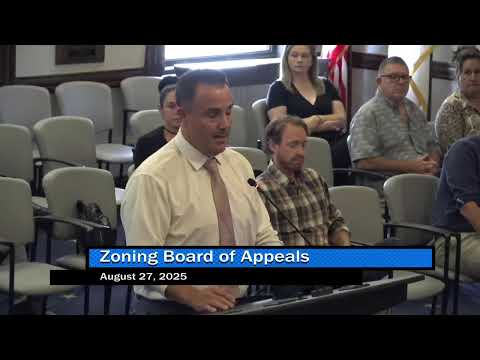
Revere ZBA continues review of 145-foot radio tower for McKinley emergency center after residents raise concerns
Summary
The Revere Zoning Board of Appeals on a unanimous roll call moved to continue consideration of the City of Revere’s application for variances to build a 145‑foot radio tower at the McKinley redevelopment site, deferring the matter to the board’s September meeting after neighborhood concerns and a Ward 4 councilor’s request for more information.
The Revere Zoning Board of Appeals on a unanimous roll call moved to continue consideration of the City of Revere’s application for variances to build a 145-foot radio tower at the McKinley redevelopment site, deferring the matter to the board’s September meeting after neighborhood concerns and a request from the Ward 4 councilor.
City officials said the tower is a critical, locally controlled microwave link to support the Metro North Regional Emergency Communications Center serving Revere, Chelsea and Winthrop. Tom Skorofsky, Chief of Planning and Community Development and project manager for the McKinley redevelopment, told the board the antenna is not a commercial cell facility and that the tower provides a redundant communications path when fiber lines fail.
The tower would sit behind the McKinley building, next to the city’s parking office, and support a new Metro North REC dispatch center to be located in the 1924 wing of the redevelopment. Skorofsky said the overall project includes an early‑childhood center with eight pre‑K classrooms, municipal offices for the parking and retirement boards, training and dispatch space for the regional communications center, and common basement uses. He said asbestos, PCB and lead abatement work is complete, bids for an old oil tank removal were due the next day, construction documents are in progress, the city aims to bid later this year, begin construction in 2026 and open the facility in 2027.
Public‑safety staff provided technical details: Skorofsky and Ivan, the consultant from Introba who worked on the design, said the proposed tower foundation would be about 19 by 19 feet and sit roughly 5.5 feet deep. Ivan explained microwave dishes on the tower connect the dispatch center to remote radio sites. He said the network is owned and maintained by the Metro North REC, not leased from commercial carriers. Ivan told the board the tower needs roughly 110 feet to reach the Winthrop water tower and about 145 feet to reach the Chelsea Soldiers’ Home; most antenna elements will be below 100 feet, but two dish antennas about two to three feet in diameter are planned above 100 feet.
Whitney Morgan, executive director of the Metro North REC, described instances when radio links dropped and dispatchers lost contact with first responders, and said the microwave link would restore communications automatically if the fiber feed fails. Jay Mazzolo, the REC’s operations/dispatch representative, said the city has lost fiber service repeatedly in recent years and that fiber repairs can take days; he said the microwave backup preserves in‑building and street‑level portable radio coverage that officers and firefighters depend on. Fire Chief Jim Cullen and Police Chief Bridal Levita said portable radio coverage inside buildings is a life‑safety issue and that the tower is intended as a resilience measure rather than a continuous transmitting cell site.
Opposition centered on visual impact, timing and possible health and property‑value concerns. Paul Ogenzio, Ward 4 councilor, said he is an opponent and asked for a continuance so the neighborhood, council and others could review communications analyses and alternatives. "The visual impact in this neighborhood . . . is going to be immense," Ogenzio said, and he asked that the design team appear before the city council and evaluate alternatives and cost tradeoffs. Resident speakers also urged consideration of existing infrastructure and urged more independent analysis.
Chair Tucker put the continuance motion to a roll call. Board members Mister Lemina, Mister Lopes, Mister O’Brien and Mister Pelton and Chairman Tucker all voted yes; the board continued the matter to its September meeting. No mover or seconder for the motion was recorded on the transcript.
The city said it would honor the councilor’s request to continue and will provide additional technical materials. Skorofsky said the presentation to the ZBA was a courtesy and that the administration is willing to reduce tower height if a smaller height can achieve required public‑safety communications at reasonable cost.
What’s next: the ZBA will take the item up again in September. City staff and the Metro North REC indicated they will supply additional technical studies, comparative site analyses and answers to questions about alternative sites and equipment configurations.