Get Full Government Meeting Transcripts, Videos, & Alerts Forever!
Get email alerts on the Legal Litigation topic
No spam. Unsubscribe anytime.
Cochise County Dale Jail District board votes to enter executive session on enforcement of LaChance settlement
Summary
The Cochise County Dale Jail District board voted 3-0 to enter an executive session under Arizona law to discuss enforcement of a settlement agreement in LaChance v. Cochise County (CB 202300363); the session and its minutes were designated confidential.
The Cochise County Dale Jail District board of directors voted 3-0 on Wednesday, Aug. 27 to enter an executive session under Arizona Revised Statutes § 38-431.03(A)(3) to discuss enforcement of a settlement agreement in LaChance v. Cochise County (CB 202300363).
The vote followed a motion by a board member to move into executive session “for discussion and possible direction regarding enforcement of settlement agreement and terms settlement agreement terms in LaChance versus Cochise County, CB 202300363.” A second was made and the board chair called the voice vote, which passed unanimously with three ayes.
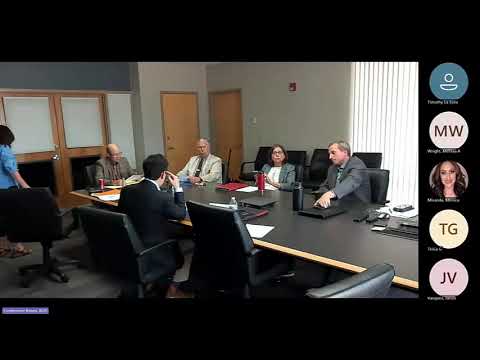
The board announced that minutes and discussion in the executive session would be kept confidential, in line with the cited statute. Present at the meeting in the Supervisors Executive Conference Room were Supervisors District 1 Crosby, District 2 Gomez and District 3 Antonari; additional attendees included the clerk, staff members Laura, Joe Casey and Aaron Gilman, County Attorney Correa, and an online attendee identified as Mr. Lasota.
After the executive session, the board reconvened and adjourned. The board noted its next regular meeting is scheduled for Tuesday, Sept. 2 at 10 a.m. in the Hearing Room.
Because the item moved the board into a closed meeting for matters exempted from public discussion under state law, the board did not disclose substantive details of the settlement or the enforcement discussion during the public portion of this special meeting.