Get Full Government Meeting Transcripts, Videos, & Alerts Forever!
Get email alerts on the Pedestrian Safety topic
No spam. Unsubscribe anytime.
Plantation council approves traffic study for midblock pedestrian signal on Cleary Boulevard
Summary
Council approved funding and a design contract amendment limited to a pedestrian-warrant study for a proposed midblock pedestrian hybrid beacon on Cleary Boulevard near Central Park; staff will return with results before committing to construction.
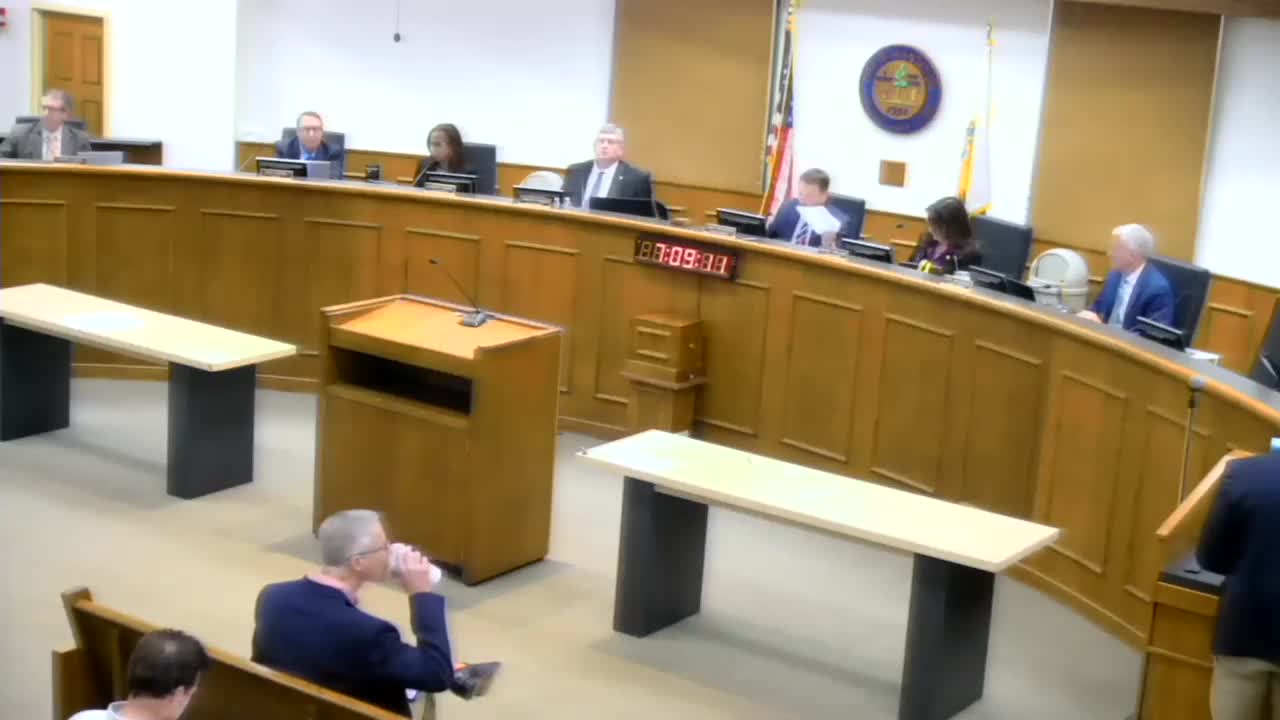
The Plantation City Council voted unanimously Aug. 27 to advance work on a proposed pedestrian crossing on Cleary (Clery) Boulevard near Northwest 90th Avenue and Central Park, approving a narrowed contract scope limited to a traffic-warrant analysis and preliminary design.
City engineering staff told the council the Metropolitan Planning Organization had already allocated $500,000 toward construction of a midblock safety improvement at the location after a multi‑agency roadway-safety audit. At the council meeting, staff recommended performing a warrant study and coordination with Broward County traffic engineers before advancing to final design. Council members and residents voiced safety concerns about pedestrians crossing the four-lane divided collector; some council members and public speakers also questioned whether a pedestrian hybrid beacon (PHB) — a signal that is normally dark until a pedestrian activates it and that uses flashing indications during the pedestrian interval — is the best or least‑confusing solution.
City Engineer Samira Shalen (presentation) described the PHB operation: the beacon remains dark, then cycles flashing yellow to steady yellow to steady red (for all directions) after activation, followed by a flashing red during the pedestrian clear interval before shutting off. She cited Federal Highway Administration materials that show crash reductions associated with PHBs and noted that Broward County recently approved similar devices on other corridors. Staff also noted the county and FDOT would review any proposed device.
Several council members and residents urged caution because PHBs use different signal phasing than standard full traffic signals and because some recent research has flagged potential driver confusion. Multiple speakers asked the city to approve only the $73,000 contract piece that covers the traffic-warrant analysis and coordination (Task 1), then return with data and Broward County’s concurrence before committing to construction. Councilmember Andreu moved to limit approval to the design services warrant analysis; the motion passed unanimously.
Councilmembers noted alternatives exist — a full traffic signal, or other enhanced midblock treatments — but engineers said a full signal is unlikely to meet warrants at that location and that the PHB was a short-term, MPO‑recommended improvement identified in the safety audit. Staff added the corridor is part of long‑range multimodal and road‑diet discussions but said the need for a safer pedestrian crossing exists regardless of conceptual future changes.
The final action instructed staff to proceed with the traffic-warrant analysis, coordinate with Broward County Traffic Engineering, and report findings to the council before any decision on construction. MPO and FDOT involvement were listed as dependencies for later phases.