Get Full Government Meeting Transcripts, Videos, & Alerts Forever!
Get email alerts on the School Transportation topic
No spam. Unsubscribe anytime.
MMSD reports smoother start to year as officials add routes, tracking and bus behavior program
Summary
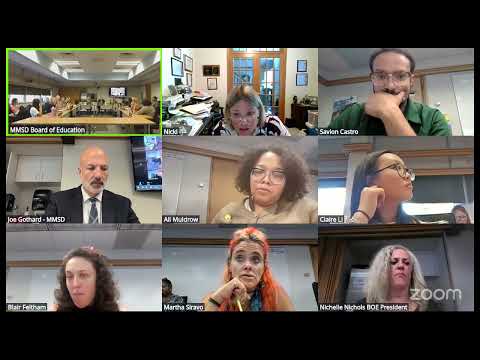
At the Sept. 15 Madison Metropolitan School District board meeting, transportation officials reported an increase in routes and riders, new tracking and behavior efforts onboard buses, recruitment challenges for attendants and drivers, and a plan to add electric buses and chargers in the coming year.
Madison Metropolitan School District transportation officials told the Board of Education on Sept. 15 that the district has increased bus service, expanded parent tracking, and rolled out a bus behavior program as the school year began.
Vanessa Cruz, assistant director of transportation and logistics, said the district moved from 171 AM/PM routes last year to 176 for 2025-26 and is transporting about 8,500 students, including 418 4K students. “My name is Vanessa Cruz, assistant director of transportation and logistics,” she said while introducing her team and the updates.
The changes included a 5-minute middle‑school drop‑time adjustment that added several routes. District contractors report 66 commercial‑driver‑licensed (CDL) drivers, four charter‑only drivers, and roughly 19–21 bus attendants; staff and contractors told the board recruiting attendants remains a challenge and they have been working with neighborhood groups to expand the applicant pool.
Officials described operational preparations that preceded the school year: drivers received route assignments early, the district and contractor First Student ran “mock day” full‑timing rehearsals, and supervisors encouraged dry runs so drivers could refine timing. Heidi Cook, Madison location manager, said of the kickoff training, “I think it was a really good meeting. The content I was really happy with.”
Mary Lou Falk, identified as customer success manager for the Central Region for the contractor, described a new bus behavior effort based on PBIS (positive behavioral interventions and supports) and added that the district produced behavior‑expectation documents in English, Spanish and Hmong for posting on buses. “We also created it in Spanish and in Hmong,” she said. The committee that developed the language included school administrators and members of the contractor’s staff; the plan pairs driver coaching with a digital behavior‑reporting tool to capture incidents and positive recognition.
Officials also reported technology and fleet changes. All yellow‑bus and specialized routes are now tracked, and the parent app had close to 2,000 guardian users early in the year. First Student said it has 3 wheelchair buses on order (expected in six to nine months) and that the contractor and district are working on electric‑bus infrastructure: designs for chargers and utility permitting are underway, the district expects Westinghouse fast chargers energized by a new transformer within about six months, and the contractor said five electric buses are planned to be on the road by 2026.
Metro (the city transit partner) is running supplemental school routes: transportation staff reported 31 supplemental Metro routes and that 5,046 Metro passes have been issued to students this fall. Officials also said there will be contract talks with Metro in October and a new Metro general manager starts Oct. 13.
Board members asked about access for students who are deaf or nonverbal, and Cruz said she would check with schools that serve deaf and hard‑of‑hearing students to confirm what communication supports are in place; a board member suggested low‑tech communication boards as a possible accommodation. Board members also asked whether a return to a two‑tier bell schedule or a “0 hour” option is under consideration to reduce late after‑school dismissal times for middle school students; staff said capacity and routing work is ongoing and a district survey will go to staff and families this fall to inform any schedule changes.
Other operational details provided at the meeting: specialized routes and after‑school runs (13 middle‑school and 7 elementary after‑school routes) are in place, the district reported about 415 specialized routes transporting 611 students and 105 rides for 133 TEP students (transcript shorthand), and officials said the starting wage for a First Student driver with no experience is $26 per hour.
What’s next: staff will follow up on specific accessibility questions for deaf and nonverbal students, complete the capacity analysis tied to start‑time options, continue recruiting drivers and attendants, and proceed with Metro contract discussions and electric‑bus infrastructure permitting.
Votes at the meeting related to transportation were procedural (minutes approval and adjournment); no formal board vote on transportation policy, contracts or the electric‑bus procurement was recorded in the transcript on Sept. 15.