Get Full Government Meeting Transcripts, Videos, & Alerts Forever!
Get email alerts on the Water Quality topic
No spam. Unsubscribe anytime.
City presentation highlights aquifer risks, urges stormwater attention as residents press for local responses
Summary
Dayton and Riverside officials described the Great Miami Buried Valley Aquifer, steps taken to reduce contamination risk and the connection between stormwater infrastructure and drinking-water protection; residents asked about local development and stormwater billing impacts.
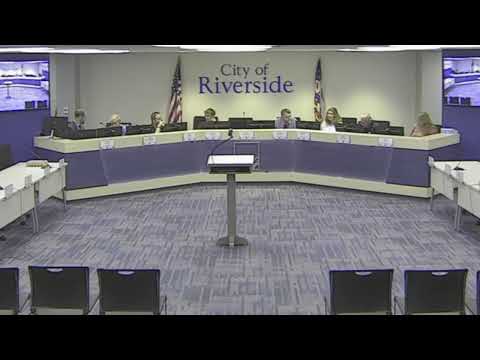
Dayton Water Department and Riverside public-health staff on Monday briefed Riverside City Council on a regional source-water protection program, describing the Great Miami Buried Valley Aquifer as the region’s principal drinking-water source and urging coordination on stormwater and land-use decisions.
The presentation, delivered by Zach Schultz of the City of Dayton Department of Water and Sarah Holod, Riverside’s well-field protection specialist, said the aquifer supplies roughly 1.6 million people in the region and serves about 400,000 Dayton water customers. Schultz told the council the aquifer is a “sole source aquifer” for the area and said its physical characteristics that make it easy to recharge also make it vulnerable to contamination: “it is the only sustainable drinking source in this area.”
The speakers said the program’s work includes business inspections, risk-reduction grants, emergency response, groundwater monitoring and public education. Holod said about “67% of the city is in the source water protection program,” and described on-the-ground steps taken in Riverside, including 17 new source-water-area signs, removal of a septic tank at the Government Services Building on Harshman Road and equipping Station 5 of the fire department with hazmat materials to speed initial spill response.
Council members and several residents pressed staff on how stormwater infrastructure and routine construction incidents can intersect with drinking-water safety. Schultz and Holod explained that where stormwater drains and how quickly water is pushed into the ground matters for contamination risk — for instance, a dry well that pushes water (and any spilled contaminants) directly into the ground is more hazardous near a well field than a properly designed storm system. Schultz summarized the interaction this way: “If you’re not trapping contaminants at the surface, odds are it’s going to get into the ground water.”
Speakers gave examples of local incidents and remediation. Holod described a found home-heating-oil tank and a 20–30 gallon spill that municipal crews removed, and she referenced the Valley Pike Superfund site, where chlorinated solvents contaminated groundwater and homes use vapor-intrusion controls. The presenters warned that a small volume of a solvent such as trichloroethylene (TCE) can impact very large volumes of water: the presentation used the example that a bottle-size amount could contaminate tens of millions of gallons beyond Safe Drinking Water Act standards.
Residents used the public-comment period to raise neighborhood questions linked to stormwater and development. One resident asked about earth-moving and tree removal at a Beatrice/Carlton property; the city manager said the applicant’s filings complied with local land-use rules and that codes staff would follow up if the work deviated from approved plans. Another resident asked about discounts tied to the new stormwater/trash billing program; staff said detailed discount procedures (for rain barrels, rain gardens and similar measures) were still being finalized and that the first bills would be issued next April covering the January–March billing period.
Council and staff emphasized coordination: code enforcement, emergency response and the source-water program already share information when incidents arise, and staff said the city and program will continue outreach and inspections. The presenters and staff encouraged residents to report concerns to the city so inspectors can verify that ongoing work complies with permits and ordinances.
Holod and Schultz’s presentation and the council’s discussion framed stormwater as part of a larger, interconnected system of land use, public safety and water protection. Schultz summed the public-health imperative: “What we have an important job to do is keep the water under us safe so people in surrounding communities can have safe drinking water.”
The city manager said staff would follow up with residents who raised questions about specific construction activity and would provide additional information about stormwater bill discounts and program timelines.