
Greater Lowell students present NASA high-altitude balloon project
Get AI-powered insights, summaries, and transcripts
Subscribe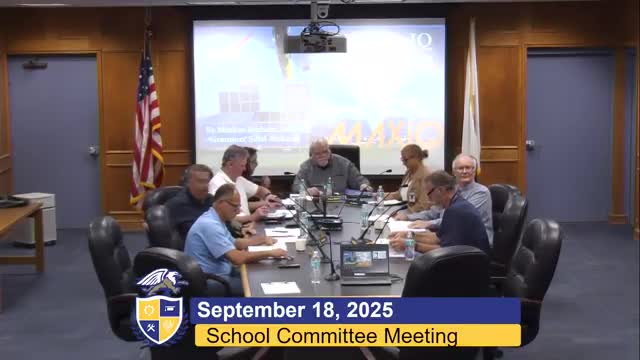
Summary
Three senior engineering technology students from Greater Lowell Regional Vocational Technical presented a Max IQ–NASA high-altitude balloon payload project to the school committee, describing the payload design, sensors used, and next steps after data return on Oct. 16.
Three senior engineering technology students and their instructor updated the Greater Lowell Regional Vocational Technical School Committee on a student-built payload flown on a high-altitude balloon through a Max IQ partnership with NASA’s Columbia Scientific Balloon Facility. The presentation described the project design, sensor suite and planned analysis of data returned from the flight.
The students — Marcus Fechner, Aiden Simmons and Sydell Alobate — and engineering technology instructor Susan Ewings told the committee the payload carried sensors for altitude, pressure, temperature and acoustic measurements. Fechner said the team examined how changing air pressure affected sound using piezo buzzers controlled by an Arduino UNO R3 and recorded decibel and frequency data. "The purpose is to enhance acoustic measurement methods and understand how sounds behave in an unobservable environment," Fechner said.
The students showed photos of the gondola and flight path and sketches of the custom enclosure they built to secure the electronics. Alobate described the short timeline and hands-on learning: she said the team had about two to three weeks to build the box and integrate the components. Simmons said the experience allowed them to work directly with Max IQ and NASA mentors via Zoom and build material for college applications and portfolios. "I felt really smart for some reason, and I got to add it on my resume and my portfolio," Simmons said.
The group said they will receive flight data on Oct. 16 and plan to compare the in-flight measurements with ground tests to correlate acoustic readings with environmental sensors for models and classroom research. Ewing told the committee the project prepares students for competitions and postsecondary STEM paths; board members congratulated the students and encouraged them to return with their analysis after the NASA debrief.
The committee did not take formal action on the presentation; the item was presented as part of the superintendent-director’s report.