Get Full Government Meeting Transcripts, Videos, & Alerts Forever!
Get email alerts on the Property Tax Revaluation topic
No spam. Unsubscribe anytime.
North Brookfield assessors explain five-year revaluation and what it means for tax bills
Summary
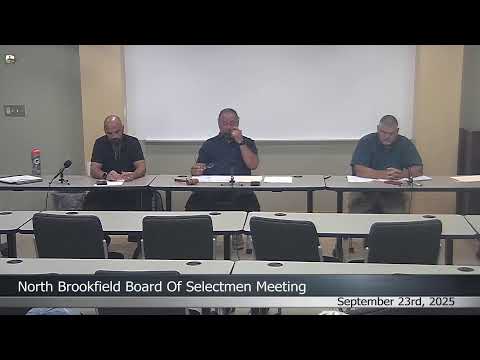
North Brookfield assessors told the Board of Selectmen on Sept. 23 that the town has completed a statutorily required revaluation of real and personal property and has received preliminary certification from the Massachusetts Department of Revenue.
North Brookfield assessors told the Board of Selectmen on Sept. 23 that the town has completed a statutorily required revaluation of real and personal property and has received preliminary certification from the Massachusetts Department of Revenue (DOR).
“In compliance with the Massachusetts general laws, chapter 40, section 56, the board assessors have completed revaluation,” an assessor said, explaining that the DOR sampled property cards, reviewed local sales from 2023–24 and provided a preliminary finding that many local values were low compared with recent sale prices. The assessors said the DOR selected about 100 property cards for detailed review.
Why it matters: The revaluation resets assessed values used to calculate each property owner’s share of the total property tax levy. The assessor cautioned that the valuation review covers sales from 2023 and 2024 and that 2025 sales were not used because the current cycle began in spring 2025. That timing means some residents will see assessed values rise to align with market sales during those two years.
Board and public questions focused on how increases to assessed values translate to changes in tax bills. Resident Keith Fontaine said his new assessed value would increase by about $133,000 and estimated that could mean an additional $1,800 annually in taxes based on his math. Selectmen and assessors responded that the town’s levy (the total dollars collected) is constrained by Proposition 2½: “The town can only go up 2 and a half percent on the aggregate,” a selectman said, meaning the tax rate is adjusted so the town’s total levy increases only by the statutory cap unless an override is approved by voters. That shifts how the burden is distributed: if everyone’s assessments rise, the town typically lowers the tax rate so the townwide levy meets the capped increase, but properties that rose more than the average will pay a larger share than before.
Assessors described the DOR process: DOR staff inspect samples of homes by type (ranches, colonials, two‑story homes etc.), confirm amenities (decks, garages, pools), and compute price‑per‑square‑foot ranges by housing category. The assessors said those price‑per‑square‑foot benchmarks, applied to the town’s data, produced the upward adjustments.
Practical steps for residents: Assessors said the new values were posted on the town website for the required review period and that residents who disagree should make an appointment for an on‑site inspection. The assessors emphasized they will meet with the property owner (or a designated adult) at the property to review data and, if warranted, document corrections. The assessors urged residents to call, email or stop by the assessor’s office; they said they will take pictures and verify amenities or removals (for example, a removed above‑ground pool).
Context and next steps: The assessors explained that once values are certified by the DOR the town must set the tax rate; the DOR’s certification is necessary for the town’s growth certification and for the Board of Selectmen and finance officials to compute the rate. Selectmen reminded residents that debt exclusions (voter‑approved debt for specific projects) will also affect the final tax bills and could cause the total increase facing property owners to exceed the 2.5% aggregate cap.
Ending: Assessors said they expect staff turnover in the coming year and asked residents interested in running for assessor to consider filing before the spring election. They reiterated that residents with questions should schedule an on‑site review so assessors can verify property details before tax bills are finalized.