Get Full Government Meeting Transcripts, Videos, & Alerts Forever!
Get email alerts on the Veterans Housing Edgerton topic
No spam. Unsubscribe anytime.
Rock County approves $300,000 to cover denied HUD payment for Edgerton veterans housing project
Summary
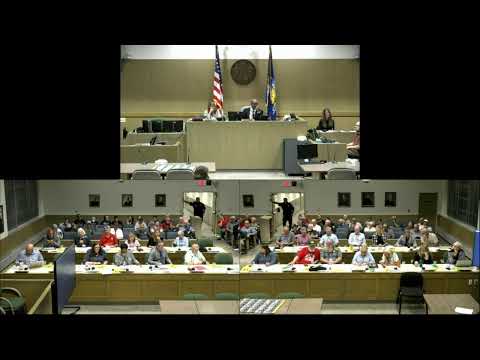
After public testimony and extended debate, the Rock County Board of Supervisors voted 23–3 to authorize $300,000 from county funds to make Edgerton Community Outreach whole after a HOME grant payment was denied because a contract was not signed before construction began.
The Rock County Board of Supervisors voted 23–3 on Sept. 11 to authorize $300,000 in county funds to cover a payment that Edgerton Community Outreach (ECO) had expected from a HOME program award but was denied after construction began without a signed contract.
ECO leaders and local veterans told the board the project at 210 West Fulton Street provides six affordable units for veterans and is occupied, but that an administrative lapse in the consortium’s grant process prevented the group from drawing down federal HOME funds. ECO representatives said local fundraising, private donations and the sale of a property have covered much of the project to date but that the $300,000 gap jeopardizes completion and stability for residents.
ECO representative Sarah Williams told the board that outreach followed county-contracted consultant guidance and relied on advice that a signed contract prior to construction was “not critical.” She said HUD later informed ECO that the absence of a signed contract before construction was “a non starter,” which blocked the grant payment. “The absence of a signed contract before construction began was the non starter,” Williams said.
Ray Oswald, president of ECO’s board, urged the county to “course correct,” saying the group had received mixed guidance and long delays from county and consortium staff. Attorney Buck Sweeney, representing ECO pro bono, said private donors and contractors have tried to reduce costs and that liens currently encumber the property. “There is a lien on the property from the contractors, a lien on it from the county,” Sweeney said, arguing the project is of historic and community value.
Several speakers described local fundraising for the project: Fred Falk and Jim Hutchinson said ECO has raised money locally (Hutchinson referenced $268,885 raised since the prior meeting and additional pledges), and some funds will come from the sale of another nonprofit property. Hutchinson also urged the board to focus on process improvements and internal controls so similar errors do not recur.
Board debate centered on two questions: whether the county bears moral or procedural responsibility for the denied federal payment, and what safeguards should attach to any county funding. Supervisor Townes argued the county’s staff and experts had provided guidance that was not aligned with the fiscal agent’s requirements and urged the board to “act with integrity.” “Integrity is a noun that draws its meaning from verbs,” Townes said.
Other supervisors pressed for accountability and safeguards. Supervisor Soderlund proposed an amendment reducing county support to $150,000 and requiring a formal loan agreement with ongoing financial reporting; that amendment failed on a roll-call vote (No 22, Yes 4). Supervisor Stevens said she supported adding specific reporting language tied to HOME/CDBG requirements but opposed lowering the dollar amount. County corporation counsel explained that the original consortium award was structured as a deferred, 0% loan with a 20-year affordability period, and that the resolution before the board would mirror those affordability and reporting standards in a county agreement.
After public comment and supervisor discussion, the board approved the resolution to provide $300,000 to Edgerton Community Outreach. The resolution requires the county administration and corporation counsel to draft an agreement that sets terms — intended to mirror HUD HOME affordability and reporting standards — before funds are disbursed. The motion passed on a roll call, 23 in favor, 3 opposed.
Board members, ECO representatives and county staff said the next steps are for administration and corporation counsel to finalize the agreement language and for the county to monitor compliance with affordability and reporting requirements. ECO speakers said the funding will allow the group to clear liens and finalize operations for residents who are already living in the units.
The board’s action followed several hours of public testimony from veterans, ECO board members, the project attorney and local supporters who urged the county to provide the funding. County staff explained that local HOME/CDBG rules are administered through a consortium and that HUD officials told ECO there is no federal appeal process that would overturn a local fiscal-agent denial.
Notes: the transcript and public comments identified a roughly $488,000 change order on the project and local fundraising totals of $268,885 plus an additional $35,000 in pledges; ECO reported having sold or planning to sell another property to cover costs. The property at 210 West Fulton Street is occupied by veterans, and the resolution’s affordability language is intended to match HOME program terms (20-year affordability window and deferred, 0% loan structure as applicable).