Get Full Government Meeting Transcripts, Videos, & Alerts Forever!
Get email alerts on the Transportation Master Plan topic
No spam. Unsubscribe anytime.
Layton presents updated transportation master plan, proposes new impact-fee schedule ahead of October public hearing
Summary
City staff and consultant Wall Consultant Group presented a draft transportation master plan update and a 10-year impact-fees package that would fund road and intersection projects through 2034; council was briefed and the plan will return for a public hearing and possible adoption on Oct. 2.
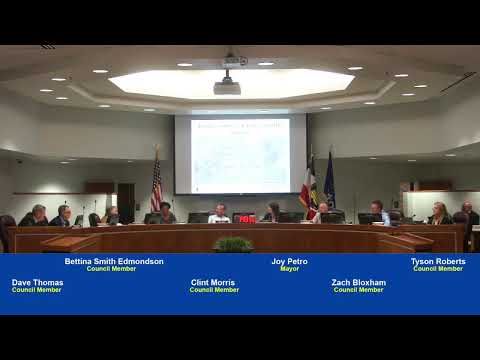
Layton City officials on Sept. 18 reviewed a draft Transportation Master Plan update and associated Impact Fee Facilities Plan and Impact Fee Analysis, saying staff will hold a public hearing and likely return to the council on Oct. 2 for possible adoption.
City staff and Wall Consultant Group consultant Jeremy (Wall Consultant Group) summarized a three-part package: a transportation master plan looking toward 2050, a 10-year impact-fee facilities plan, and an impact-fee analysis that sets the maximum fee the city may charge new development for growth-driven transportation costs.
The plan identifies phased projects (three 10-year phases) including widening, new road construction, intersection improvements and active-transportation projects. The presentation used an interactive “story map” to show existing conditions, projected 2034 and 2050 congestion, and a “build” versus “no-build” comparison. Jeremy said the model shows substantially more locations with unacceptable congestion if the city does not implement the identified projects.
Why it matters: the impact-fee analysis is the financial proposal for how new development will help pay for growth-related transportation capacity. Staff and consultant Zions Public Finance estimated 13 impact-fee-eligible roadway projects in phase 1 with a total estimated cost of about $71 million; $11.4 million of that was identified as impact-fee eligible. The consultant estimated approximately $30 million of the phase-1 needs would rely on external funding (for example UDOT) or local funding beyond what impact fees would cover.
Key funding and fee details - Phase 1 (next 10 years): 13 roadway projects; estimated total cost ~$71,000,000; impact-fee-eligible portion cited at $11,400,000; an inflation allowance of about $12,900,000 was shown on staff slides. Sandridge Parkway/3700 West was noted as a large-cost item with a high share of cut-through trips and outside funding potential. - Intersection projects: 14 projects with estimated cost ~$6,200,000; about $3,800,000 of that was impact-fee eligible. - Impact-fee calculation: the draft analysis moves from a historic PM-peak-hour basis to an average-daily-traffic basis. The consultant’s draft proposed maximum transportation impact fees would equate to about $173.37 per trip in the calculation presented to council.
On safety and multimodal elements, staff said the master plan incorporates the city’s active-transportation plan and a safety analysis using crash data (Jan. 2019–Dec. 2023). The analysis showed higher rates of severe crashes on some city corridors compared with county averages, and staff highlighted recommendations such as right-turn restrictions, leading pedestrian intervals and signal timing adjustments. The city said it has two corridors slated for road‑safety audits funded through regional Safe Streets for All programs.
Council members asked about the ranking and flexibility of projects, whether projects are prioritized by phase rather than strict numeric priority, and how signals and other treatments are warranted. Jeremy and staff explained that many projects are phased based on projected growth and opportunity; some intersection treatments are triggered by volume warrants, not only crash history, and traffic impact studies tied to development can accelerate individual projects.
Next steps and public review Staff intends to circulate the full 200-page packet and the story map to council and the public, and to hold a formal public hearing on Oct. 2. If adopted, impact fees may take effect after adoption consistent with the Impact Fee Act’s implementation rules. Staff advised that impact fees must be spent or encumbered within six years of collection under state law, and regularly updated analyses will be required to remain compliant.
A consultant noted a central framing point for the interactive materials: "No build does not mean that there will be no building," meaning the modelling shows projected congestion if the network is not improved even as growth occurs.
Ending: Council members encouraged staff to continue outreach, noted the plan’s effort to balance roadway capacity with active-transportation and transit considerations, and asked staff to supply comparative figures (current vs. proposed fees) and the full technical appendices before the Oct. 2 hearing.