Get Full Government Meeting Transcripts, Videos, & Alerts Forever!
Get email alerts on the Open Meetings Law topic
No spam. Unsubscribe anytime.
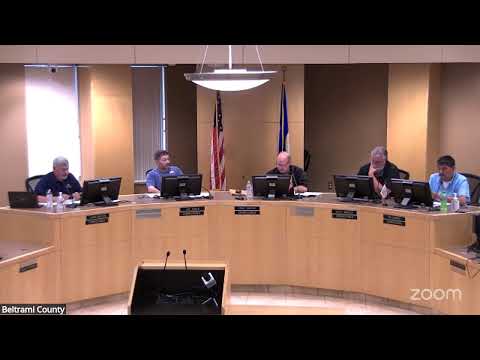
Beltrami County attorney briefs commissioners on changes to Minnesota open meeting law allowing private remote participation
Summary
County attorney reviewed 2025 amendments to Minnesota open meeting law (chapter 13D): remote participants no longer must be at an accessible public location, notices must say members may participate remotely, at least one person must be physically present, and roll-call voting is required when any member is remote.
Beltrami County Board of Commissioners received an update on recent changes to Minnesota's open meeting law at a regular meeting, including a removal of the requirement that remote participants be in an accessible public location.
County Attorney David told commissioners the 2025 legislation amending chapter 13D of Minnesota statutes took effect July 1 and relaxes an earlier rule that required a remote participant to be in a public place where members of the public could sit next to them. "Remote locations no longer need to be open and accessible," David said, adding that members may now participate from private settings such as their home or office.
The county attorney emphasized remaining obligations: whichever location is listed as the official meeting site must be open to the public; at least one person must be physically present in the official meeting room; members of the public at the physical location must be able to see and hear the full meeting; and meeting notices must state that members may participate via technology. David also said that when any member participates remotely, votes must be taken by roll call rather than by voice vote.
David described the changes as largely procedural but urged practices for transparency and accessibility. He recommended continuing to ensure remote participants are visible and audible and said that while the statute does not explicitly require a camera on a remote participant, that remains a best practice. He also reminded commissioners that residency requirements for officeholders were unchanged. "Just because you don't have to be at the meetings every time doesn't mean you don't have to live in the county," he said.
Commissioners asked clarifying questions about the requirements for cameras and whether notice must list the remote location; David said the law does not require identification of where a member will appear, only that the notice disclose that members may participate remotely. Several commissioners and staff discussed practical limits and liability (for example, urging that members not drive while participating).
The briefing was informational; no formal policy change or vote was recorded during the presentation.
The county attorney said he would stand for questions and provided contact points for further clarification.