Get Full Government Meeting Transcripts, Videos, & Alerts Forever!
Get email alerts on the Economic Development topic
No spam. Unsubscribe anytime.
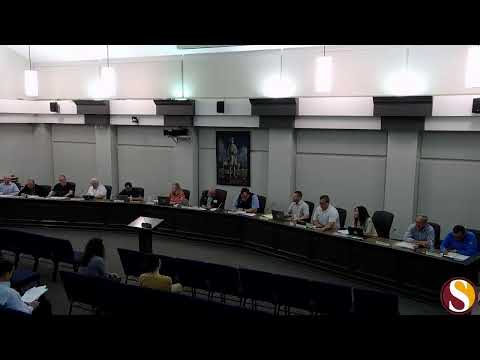
Council approves tax abatements and sign variance for Kent Road redevelopment including Sheetz and Chick‑fil‑A
Summary
Stowe City Council adopted three CRA tax‑incentive agreements for the Kent Road development and approved a contested signage variance for 4285 Kent Road, clearing major hurdles for a multi‑tenant project anchored by Sheetz and Chick‑fil‑A.
Stowe City Council on Sept. 25 approved three Community Reinvestment Area (CRA) tax‑incentive agreements for parcels on Kent Road tied to a planned mixed commercial development anchored by Sheetz and Chick‑fil‑A, and separately approved a variance for a large freestanding sign at 4285 Kent Road.
The CRAs grant 75% property tax abatements for 12 years for three parcels—Sheetz (Parcel 1), Chick‑fil‑A (Parcel 2) and two rear retail buildings (Parcel 3). Council also approved resolution 2025‑190 granting a sign variance for the Sheetz/Chick‑fil‑A development’s proposed 110‑square‑foot, 20‑foot‑tall monument sign despite a planning commission recommendation of denial.
Why it matters: The development team said the site carries unusual upfront costs—substantial demolition, a high volume of fill and a large outstanding tax arrearage—that affect feasibility. Approving the CRA agreements will reduce near‑term tax bills for the developer while, officials said, increasing assessed value and payroll that will produce new tax receipts over time.
Planning Director Zach Cowen summarized the project layout in committee, saying the site has been split into Lot A (Sheetz), Lot B (Chick‑fil‑A) and Lot C (rear retail) and identified the variances required for the freestanding sign, including height, size and setback exceptions. Cowen also noted revisions the applicant made after the planning commission hearing.
Developer Lance Osborne, who represents the project team, told council the site is not a typical greenfield development. "The demolition is another," Osborne said, listing major site constraints including nearly 20,000 cubic yards of fill needed and relocation of an existing detention basin, and noting about $700,000 of outstanding real‑estate taxes tied to the property that will be cleared at closing. "If we could approve this one, that would be great. We can move forward," Osborne said, explaining the project’s tenant leases and timing are contingent on approvals.
Council debate focused on balancing near‑term revenue the city and school district forego under the abatements against longer‑term economic activity and the cost of returning a problematic property to productive use. Councilmember Coffey said she was concerned the 75% abatement over 12 years is "a lot" for a high‑demand commercial area and signaled she would not support the CRA; other councilmembers including McIntyre and Baranek said they supported the package and emphasized the project’s site constraints and potential to resolve long‑standing blight and arrears.
Votes at a glance: Council adopted the three CRA agreements (resolutions 2025‑192, 2025‑193 and 2025‑194) and the sign variance (resolution 2025‑190). On each CRA resolution council recorded six votes in favor and one against (Coffey). The sign variance likewise passed with a 6–1 vote (Coffey opposed).
What happens next: Developers said they expect to finalize leases and begin site work soon after council action; the applicant asked council to avoid additional delays that could impede the project’s schedule. If the sign approved by council differs materially from a later revised proposal the applicant submitted, staff said the revised design would need to return to planning commission.
Documentation: The council adopted the CRA agreements and sign variance during the regular council session on Sept. 25; these items will be reflected in the project permitting and tax records.
Ending: Councilmembers who voted for the package emphasized the project's ability to clear arrears, create jobs and raise taxable value; councilmembers who voted no cited concern that the abatement terms are unusually large for this market.