Get Full Government Meeting Transcripts, Videos, & Alerts Forever!
Get email alerts on the Transportation Infrastructure topic
No spam. Unsubscribe anytime.
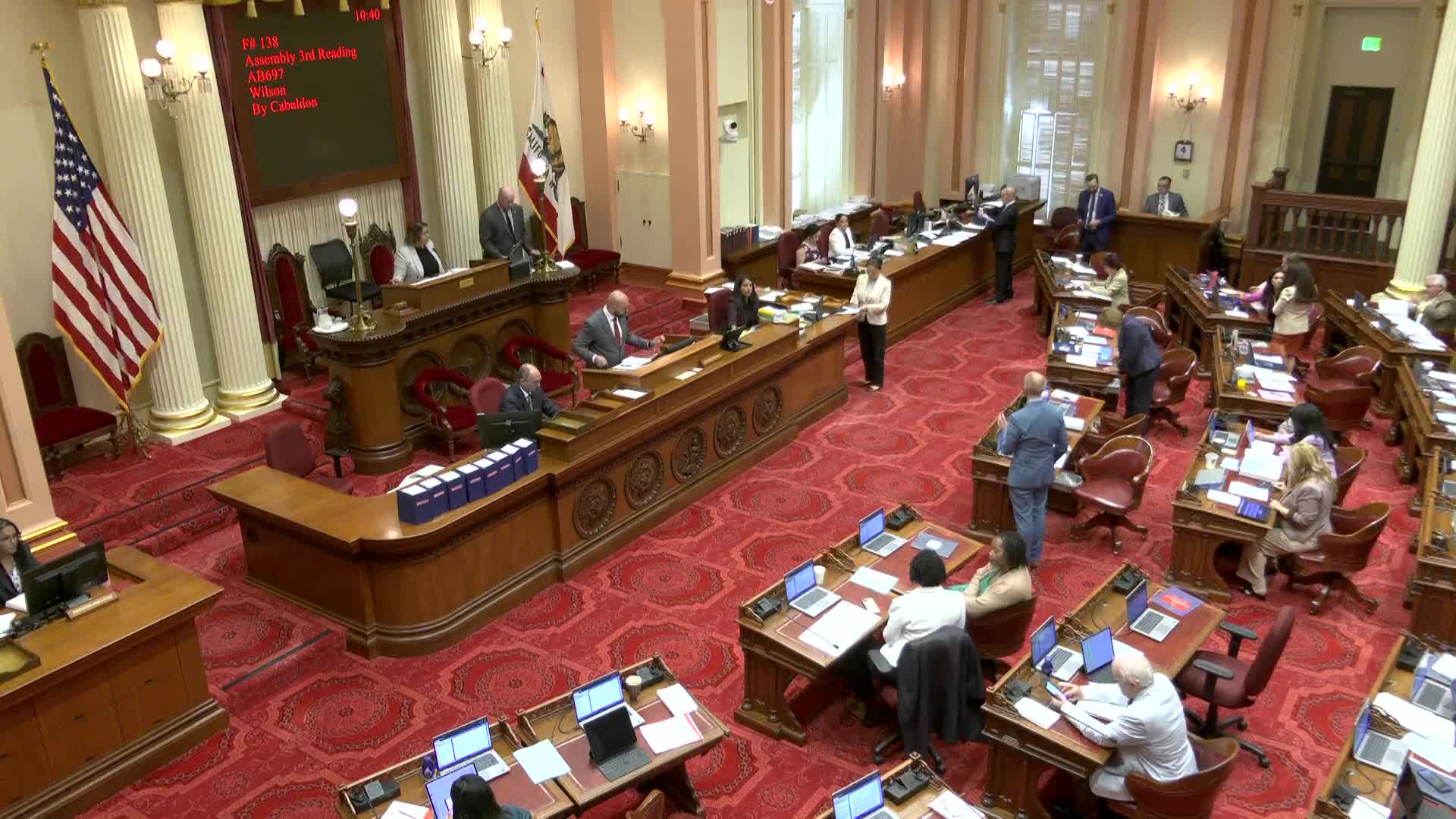
Senate approves interim Highway 37 resilience authorization after extended debate over scope and mitigation
Summary
Senate Bill 697, aimed at authorizing an interim Highway 37 resilience project and incidental-take authority for several species while requiring mitigation and restoration, passed the Senate after extended floor discussion about near- and long-term solutions for the corridor.
Senate Bill 697, presented Sept. 5 by Senator Wilson and discussed at length on the floor, authorizes incidental take for four species as part of an interim project on State Highway 37 designed to make the corridor resilient to near-term sea-level rise while the state continues work toward a longer-term elevated-causeway solution. Senator Wilson described Highway 37 as a vital regional corridor linking Solano, Sonoma and Marin counties, emphasizing both the scenic value of the route and its importance to essential workers commuting across the North Bay.
Wilson said the interim half‑billion-dollar project is an essential step — and that the incidental-take permit and mitigation obligations required by the bill will apply whether the interim or the longer-term project moves forward. He noted the elevated causeway is the preferable long-term solution but that the size and cost of that project ($11 billion, by his account) made an immediate appropriation unlikely.
Opponents and commenters described the project as contested locally; some argued for alternative long-term investments like improved transit or more local housing to reduce long commutes. Wilson responded that transit improvements require reliable roadway capacity and that the interim project enables needed restoration work and species mitigation tied to the resilience effort.
The legislation specifies that mitigation will be required at levels consistent with habitat conservation plan or natural-community-conservation-plan protections and that restoration projects would be integrated with the resilience work. After extended floor remarks, the Senate recorded a roll-call vote and the bill passed.
Why it matters: Highway 37 is a critical regional corridor vulnerable to sea-level rise. The bill authorizes an interim resilience project and creates a statutory path to secure incidental-take protections tied to mitigation and habitat restoration; it also frames the project as a step toward a larger, more expensive long-term causeway.
Speakers - Senator Bill Wilson — presented SB 697 and supported the interim resilience project. - Senator Alvarado Gill — offered a brief floor comment in support (friendly exchange noted).
Authorities - References to habitat-conservation-plan and natural-communities-conservation-plan protections were made on the floor as the standard for mitigation and incidental-take permitting.
Actions - Motion: Passage of SB 697 (interim Highway 37 resilience and incidental-take authorization). Mover: Senator Wilson. Outcome: approved by roll-call vote recorded on the floor.
Clarifying details - Project cost: Senator Wilson described the interim project as a half‑billion-dollar investment and referenced a long-term elevated-causeway alternative with an estimated cost of around $11 billion as context for the interim approach. - Mitigation requirements: Floor remarks stated mitigation will be required consistent with HCP/NCCP protections and that restoration projects will be integrated.
Ending SB 697 passed the Senate after extended debate and will proceed per legislative procedure. Implementation will involve coordinating mitigation and restoration efforts alongside the interim resilience construction and any further planning toward a long-term causeway.