Get Full Government Meeting Transcripts, Videos, & Alerts Forever!
Get email alerts on the Municipal Budget Millage topic
No spam. Unsubscribe anytime.
Miramar keeps millage at 7.1172 mills, adopts tentative $458 million FY2026 budget
Summary
The City Commission of Miramar voted to adopt a 7.1172 mill ad valorem tax rate and a tentative $458 million fiscal year 2026 budget. The millage is 6.41% above the rollback rate; the measure passed on a 4–1 vote, and the budget passed unanimously.
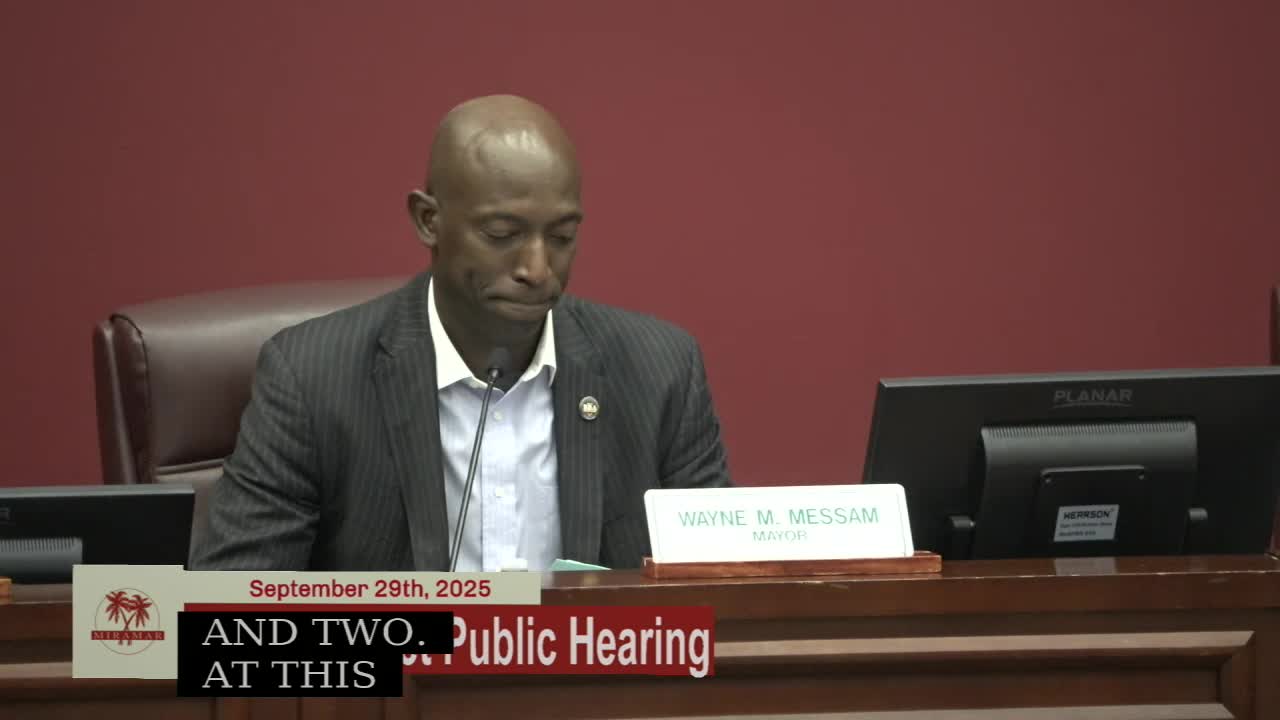
The City Commission of Miramar on Sept. 29 adopted an ad valorem tax operating millage of 7.1172 mills and approved a tentative fiscal year 2026 operating budget totaling about $458 million.
The millage ordinance (temporary ordinance No. 18-52) passed 4–1: Commissioner Chambers, Vice Mayor Colburn, Commissioner Edwards and Mayor Messam voted yes; Commissioner Sherazard voted no. The ordinance sets a rate the city said is 6.41% above the state-calculated rollback rate of 6.6885 mills. The separate ordinance adopting the tentative operating and capital budget (temporary ordinance No. 18-51) passed unanimously.
The proposed millage and budget were presented by Rafael San Miguel, management and budget director, who described the FY2026 package as emphasizing fiscal responsibility, investments in “human resources” and community well‑being, and continued use of five‑year forecasting and stakeholder engagement. San Miguel told the commission the total tentative budget for all funds is $458,000,000 and that the general fund comprises about 53% of the total (roughly $241.7 million). He said enterprise funds (utilities and stormwater) account for about 28% ($127.3 million); internal service funds about 12% ($53 million); and debt service about 3% ($11.4 million).
San Miguel and staff explained the tentative budget reflects a net increase of roughly $11.5 million (2.6%) compared with FY2025, and that much of the change at the tentative stage is attributable to including the capital improvement program (CIP) in the budget. He said capital projects, enterprise CIP and reappropriations account for most of the movement between the proposed and tentative budgets.
The presentation also outlined revenue sources and uses. Ad valorem taxes were shown as the largest single revenue source for the general fund (about 43%, or ~$110 million). Personnel costs were listed as the largest general fund expense (about 68% of general fund spending, or roughly $165.3 million), with public safety comprising about 51% of general fund expenditures.
San Miguel provided a household example: the average homestead single‑family home's taxable valuation rose from $258,712 to $267,665; because of the valuation increase (and the state Save Our Homes cap), he said the average homestead property would see a city tax increase of $63.72 for the year (about $5.31 per month). He also said a typical commercial space example would see about $138 per year in increased city taxes. The presentation noted the City of Miramar represents roughly 35% of a typical local property tax bill; other taxing authorities — including the Broward County School Board and Broward County government — make up the remainder.
Commissioner Sherazard read a prepared statement opposing the millage decision and asking the commission to find additional internal savings. “The proposed … budget keeps the millage rate at 7.1, and I do believe that there should still be room for improvement on that millage rate,” she said, adding concerns about seniors and low‑income residents for whom even modest increases are burdensome. Sherazard voted against the millage ordinance but supported the budget ordinance at the later vote.
Other commissioners thanked staff for the presentation and emphasized the city’s sustained focus on public safety and on preserving fund balances. Several commissioners said they favor keeping a balanced approach that funds public safety and critical infrastructure while limiting other spending. The city manager recommended approval of both ordinances.
The formal record reflects required state recitals read into the record (Chapter 200.0652, Florida Statutes) explaining the rollback rate and disclosure obligations.
Votes at a glance: temporary ordinance No. 18-52 (adopt millage rate 7.1172) — Passed 4–1 (Chambers yes; Sherazard no; Colburn yes; Edwards yes; Mayor Messam yes). Temporary ordinance No. 18-51 (adopt tentative operating and capital budget) — Passed 5–0.
The commission’s tentative budget adoption allows staff to begin the fiscal year on Oct. 1 while the commission completes the remainder of the budget process; final adoption and any amendments will return to the commission in subsequent hearings.