Get Full Government Meeting Transcripts, Videos, & Alerts Forever!
Get email alerts on the Airport Capacity Parking topic
No spam. Unsubscribe anytime.
Vero Beach leaders seek parking and terminal plan as commercial service expands
Summary
City staff and councilors discussed immediate and longer-term parking and terminal needs at Vero Beach Regional Airport after additional carriers began scheduled service; staff outlined short-term fixes, a terminal renovation due this winter and options for a multi‑million dollar terminal expansion.
Vero Beach City Council members and airport staff discussed steps to address mounting parking congestion and constrained terminal space at Vero Beach Regional Airport as Breeze, JetBlue and American increase scheduled service.
Todd Shear, airport director, told the council the airport can currently accommodate about 1,100 cars across paid and unpaid lots but that overflow parking has been present “every day” since the 2023 holiday season. Shear said staff and consultants (Hansen Professional Services) are developing options ranging from short‑term parking fixes to a potential new terminal and that some near‑term improvements — covered walkways, additional restrooms and covered baggage claim — are scheduled to be completed by late November or early December.
Why it matters: council members said passenger traffic during traditional hours (roughly 7 a.m.–9 p.m.) already places the terminal at capacity; continued airline growth could create recurring crowding and cause scheduling pressures if aircraft are grounded. Councilors pressed staff for concrete short‑term actions and a timeline before heavy winter travel begins.
Staff recommendations and short‑term steps Todd Shear said staff have identified a long‑term overflow area (shown to council in green) that is now under city control after a prior Letter of Intent with Skyports was severed. That area previously had been discussed for vertiport use and now is being reserved for airport purposes such as long‑term or overflow parking.
Short‑term steps already under way include: - A rental car facility (consolidated rental car facility) under lease that should free roughly 30 short‑term parking spaces when it opens; staff expect construction to begin “in the next few months” and possibly to be operating by next summer. Shear said staff will obtain and circulate a timeline from the rental‑car operator. - Use of the green overflow grass lot with signage already in place and an existing plan for Avis (a tenant) to shuttle return‑car customers from that lot; Avis told staff it will run a 12‑passenger van shuttle and indicated willingness to shuttle airline passengers as well. - Temporary lighting from rented light towers (four corners), with staff exploring solar options for power, and staff will investigate feasibility of security cameras for paved and overflow lots. - Reassignment of short‑term ADA parking spots and creation of additional ADA spaces in a planned lot expansion to meet FAA guidance; staff said some current short‑term spaces were made “no time limit” at FAA direction to meet interim ADA needs and will revert to time‑limited spots after the expansion.
Medium‑ and long‑term options Shear outlined three broad paths for larger projects: fund and build a city‑led expansion (the traditional route, potentially four to five years), partner with a third party (lease the property to a developer who builds and operates facilities), or a public‑private partnership that accelerates delivery. Staff said leasing to a third party is often the quickest route because private developers can compress design and construction schedules. A full terminal expansion drawn in staff materials could cost in the $20–25 million range and would take several years to deliver under the typical municipal procurement cycle.
Traffic, circulation and operations Councilors raised traffic flow concerns because parkway access points converge near the terminal. Shear said some short‑term renovation items will modestly improve circulation but cannot change the site’s underlying geometry until a larger project is executed.
On aircraft handling capacity, staff said the airport is constrained by the number of parking positions for air carrier aircraft and by terminal capacity for screened passengers. The airport manager noted the city’s rates and fees resolution includes a scheduling provision (minimum of one hour between departures) to help manage terminal loads; however, staff said federal airport obligations limit the city’s ability to deny carriers use of available facility capacity if infrastructure exists.
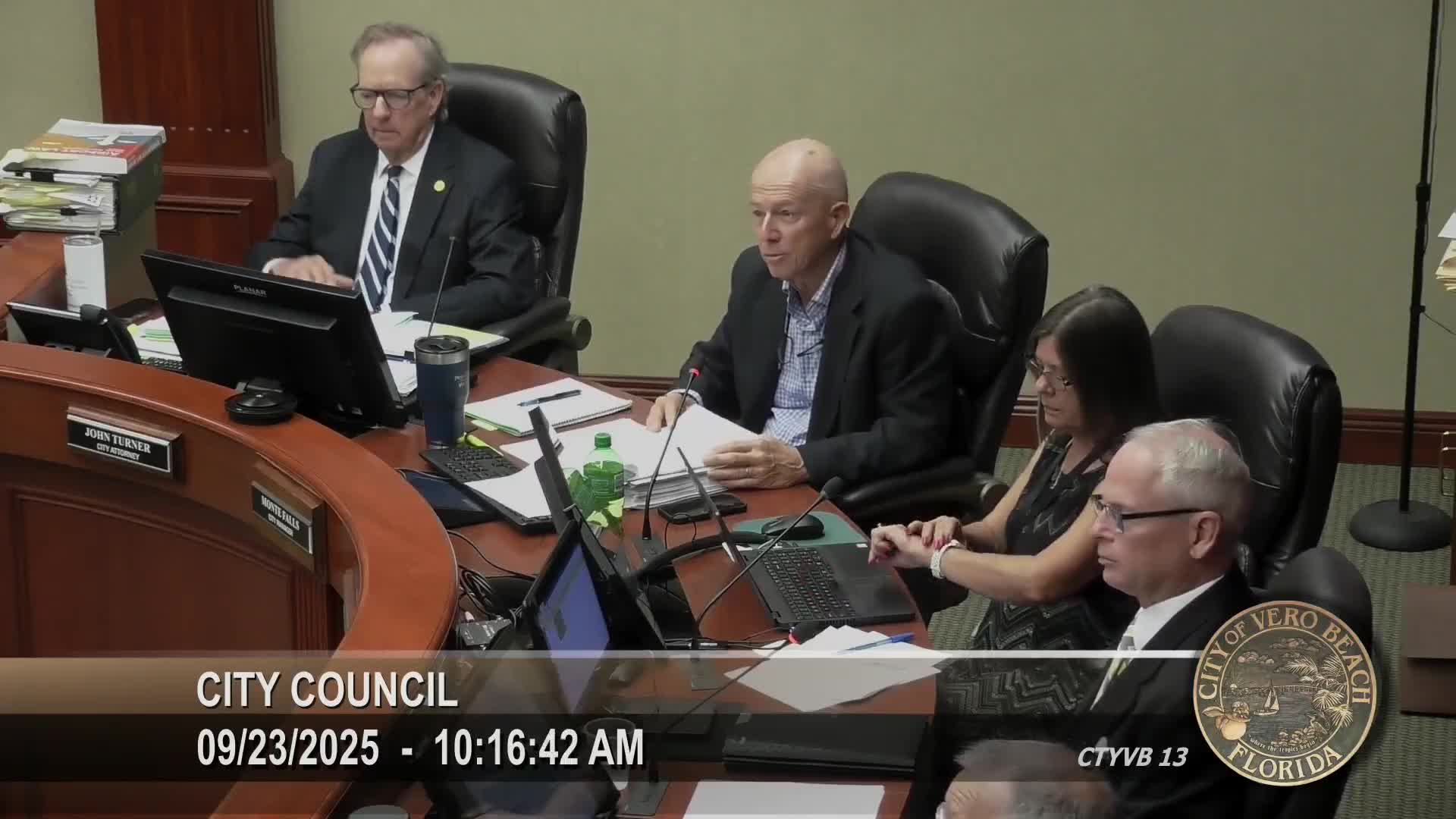
Council reaction and next steps Councilors urged staff to provide a needs assessment, cost estimates and timetables and to return with any lease agreements or partnerships that require council approval. City Manager Monty Falls and Shear said staff will coordinate with FDOT on a redesign for the paved lot expansion (staff are awaiting FDOT comments and potential funding for redesign) and will bring lease or operating agreements forward for council action when ready. Falls and Shear also said staff will pursue design and permits for the terminal renovation due this winter and continue outreach to potential parking partners and hotel developers about shared parking solutions.
Staff emphasized a cautious approach to a major terminal expansion until airline schedules prove sustained; councilors replied that planning should proceed in parallel so the city is not caught flat‑footed if demand remains high.
Ending: The council asked staff to return with a clearer timeline, any lease agreements requiring approval, and updates about FDOT’s decision on redesign funding; staff said they expect some parking and terminal renovation work to be in place for the upcoming high season.