Get Full Government Meeting Transcripts, Videos, & Alerts Forever!
Get email alerts on the City Finance topic
No spam. Unsubscribe anytime.
PFM presents deficit-closing options as Williamsport faces multi‑million shortfall
Summary
Consultant Gordon Mann of Public Financial Management outlined options to close a projected $4.5–$5 million recurring gap in Williamsport’s 2026 budget, including real estate tax increases, home‑rule earned income tax authority, use of one‑time reserves and operational changes such as regionalization and staff attrition.
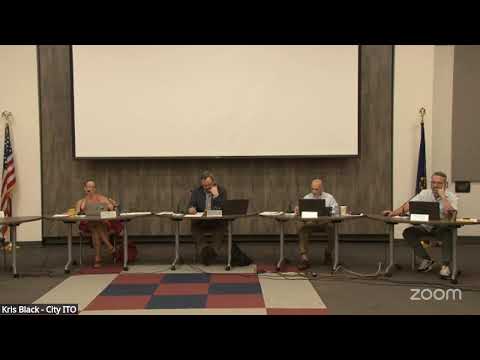
Williamsport — Gordon Mann of Public Financial Management (PFM) returned to City Council on Sept. 18 to present a list of options the city could use to close a projected multi‑million dollar budget shortfall in 2026. Mann summarized a multiyear financial plan his team is preparing under a grant from the Pennsylvania Department of Community and Economic Development.
Mann told the council the current 2025 budget is balanced only because it relies on one‑time reserves and emergency funds; removing those one‑time items produces “about a 4 and a half million dollar deficit.” He said the projection for 2026 is “about a $5,000,000 deficit.” Mann urged the council to favor recurring solutions when possible so actions taken for 2026 also reduce shortfalls in 2027 and 2028.
The consultant presented a menu of major options (defined as actions estimated to be worth at least $100,000): increasing the real estate tax; pursuing home rule to gain earned‑income tax flexibility; using available reserves in the short term; pursuing regionalization of services (notably fire) with neighboring municipalities; targeted staff reductions via attrition; slower wage growth; health‑plan design changes and higher employee premium contributions; enhanced tax collection; modest nonrecurring revenue sources; and, in limited cases, asset strategies for City Hall.
Mann quantified several items. He said the city has roughly $7.4 million in operating cash, has set aside about $3.6 million for an emergency reserve and estimates about $2.1 million is needed to cover cash flow until tax receipts arrive — leaving “about $1,700,000 worth of money available that we think could be applied to a deficit.” On tax options he said a half‑percent increase in the earned income tax could generate about $3 million annually and “is worth as much as a 20% increase in the real estate tax,” while noting the earned‑income base generally grows faster than assessed value. Mann also said the city’s real estate tax base has declined slightly year‑to‑year while earned income grows an estimated roughly 3% per year.
On staffing, Mann provided ballpark values for savings through attrition: a police officer vacancy at roughly $107,000, a firefighter vacancy at a similar amount and certain public‑works positions around $75,000. He warned that layoffs have additional costs (unemployment claims) and said most personnel changes would need collective‑bargaining negotiation: “This is a financial recommendation where we’re saying we need to buy time for something to take effect.”
Mann said home‑rule reform — a multi‑step process that begins with a ballot question to create a government study commission and can take many months — could give the city authority over its local earned‑income tax rate. He cautioned that the full home‑rule path could take until 2028 or 2029 before new taxing authority would be available, depending on the pace communities adopt the charter.
On regionalization Mann described a potential near‑term opportunity with South Williamsport and Loyalsock for shared fire services and related functions; he emphasized that regional agreements save net costs only if they reduce the city’s existing net expense rather than simply create revenue offsets for added services.
Council members asked clarifying questions and emphasized the need for more analysis before decisionmaking. Council President Adam Yoder told residents and staff the council was not taking final action that night: “we're not making decisions here tonight.” Mann said his team will return with a second formal presentation focused on operational findings and a recommended package of actions; the next formal management review is scheduled for Oct. 16.
Why it matters: Mann framed the issue as structural rather than solely cyclical — the city faces a recurring gap that will require a mix of revenue and expenditure measures. Council members and the administration said they will weigh tradeoffs between raising taxes and reducing services or staffing.
What’s next: PFM will complete the second phase of its review, report back on operational opportunities and offer a recommended combination of actions that could close the 2026 budget hole while creating recurring benefit in later years.