Get Full Government Meeting Transcripts, Videos, & Alerts Forever!
Get email alerts on the Public Health Fund topic
No spam. Unsubscribe anytime.
Cherokee Nation council approves amendments to Public Health and Wellness Fund Act, raising set‑aside from 7% to 10%
Summary
The Cherokee Nation council on a unanimous roll‑call vote approved amendments to the Public Health and Wellness Fund Act that raise the annual set‑aside of third‑party health revenue from 7% to 10%.
The Cherokee Nation council on a unanimous roll‑call vote approved amendments to the Public Health and Wellness Fund Act that raise the portion of third‑party health revenue reserved for public health and wellness from 7% to 10%.
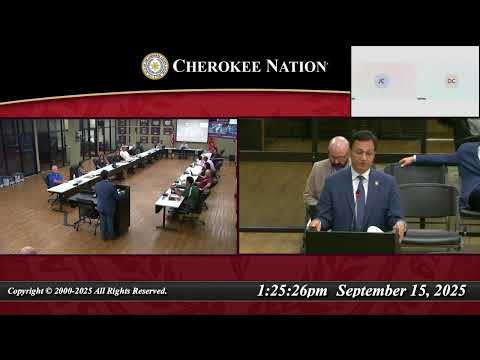
Chief Hoskin, speaking to the council before the vote, said the original law dates to 2021 and that the set‑aside was intended as “a percentage of third party revenue to really focus in on all things public health and wellness.” He urged councilors to formalize the framework for how those dollars are distributed and to increase the set‑aside so the fund can support both operations and community projects.
The amendments adopted by the council require the administration to deliver a transparent framework for dividing funds among categories such as wellness center operations, grants, infrastructure tied to public health and district allocations. Chief Hoskin described examples of past and potential uses for the fund: wellness centers and fitness‑partner subsidies, harm‑reduction seed funding, grants to schools and nonprofits, sidewalk and walking‑trail projects, water and wastewater work, and targeted housing and community infrastructure in rural areas he named, including Keys and Lost City.
Chief Hoskin said the administration proposes increasing the annual set‑aside from 7% to 10% of third‑party revenue. He also proposed a standing district and at‑large infrastructure allocation of $100,000 per district, which he described as totaling $1,700,000 when the two at‑large districts are included. The amendments also clarify and expand the Act’s definition of “public health and wellness” to include physical and mental wellness, substance‑use programs, smoking cessation, public water and wastewater systems, public restrooms, sidewalks and certain types of housing and community infrastructure.
The motion to approve the 2025 amendments was made by Speaker Johnny Kidwell and seconded (second not specified in the transcript). A roll call recorded the vote as 17 yes, 0 no. The clerk announced, “Motion passes 17 to 0.” Following the vote, staff noted the item must go to the September rules meeting for additional consideration and scheduling.
Quotes from the meeting reflect the council’s stated intent that the fund remain self‑sustaining and recurring. Chief Hoskin said the fund “doesn’t rely on a penny of federal dollars” and described it as a hedge against shifting federal priorities. He told councilors the amendments add accountability by formalizing the plan and making it available for public inspection.
Implementation and next steps noted at the meeting include: formal adoption of the distribution framework by the administration, annual forecasting of third‑party revenue to guide allocations, a $100,000 per‑district discretionary infrastructure set‑aside tied to public health objectives, and referral of the item to the September rules meeting for procedural follow‑up.
Votes at a glance
• Public Health and Wellness Fund Act 2025 amendments — Motion to approve moved by Speaker Johnny Kidwell; second not specified; roll call vote 17–0; outcome: approved. The item will be placed on the September rules meeting agenda for additional processing.