Get Full Government Meeting Transcripts, Videos, & Alerts Forever!
Get email alerts on the Public Safety Police Protocols topic
No spam. Unsubscribe anytime.
Dorchester County ACC to pursue K-9 training observation after canine-search complaints
Summary
The Dorchester County Administrative Charging Committee approved minutes, discussed complaints about canine searches and authorized staff to explore training and observation opportunities to better adjudicate future cases; the board then moved into a closed session to consider specific complaints and obtain legal advice.
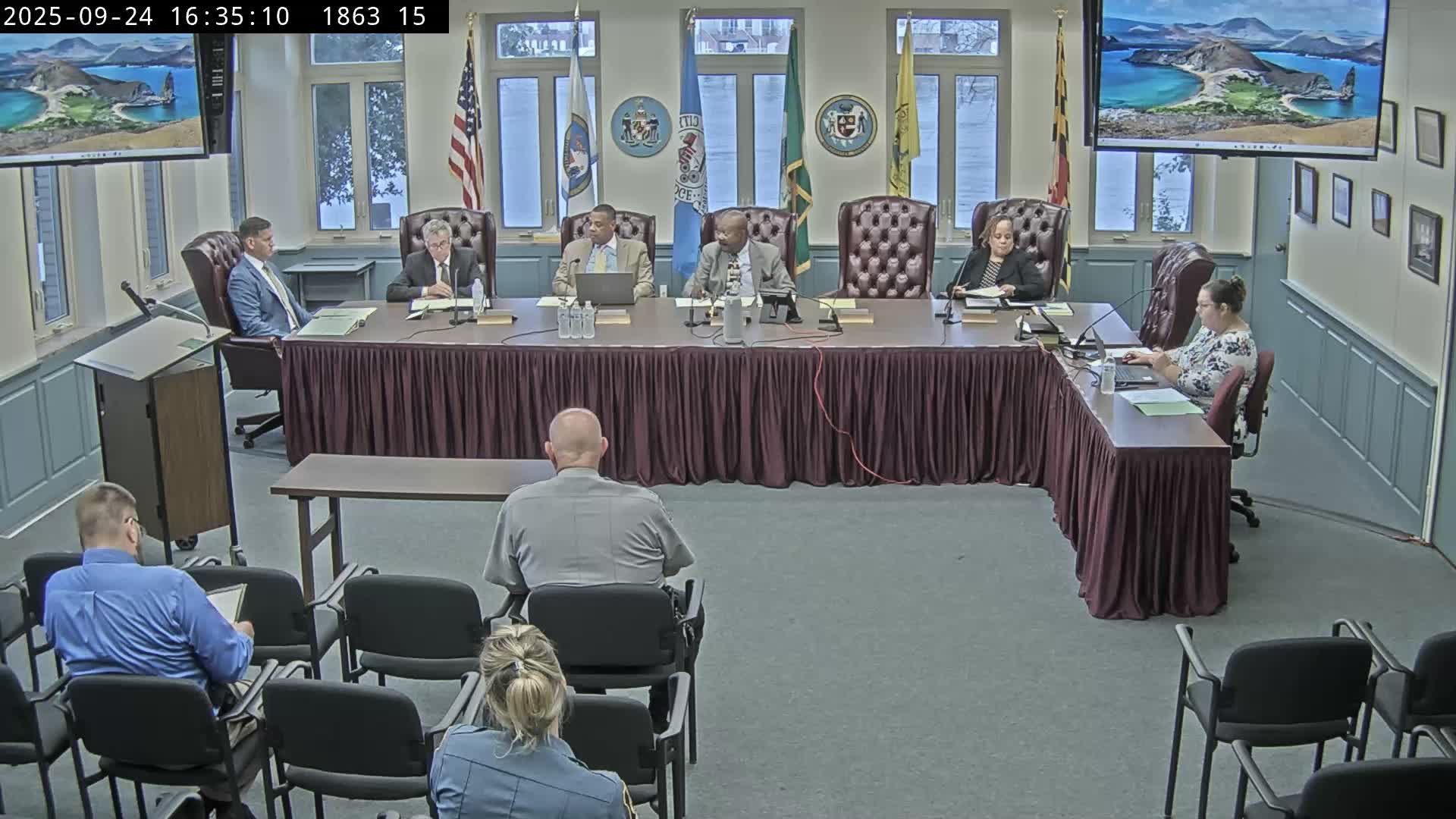
The Dorchester County Administrative Charging Committee on an open-session meeting in September 2025 voted to accept its prior meeting minutes, discussed recent complaints involving law-enforcement K-9 searches and authorized staff to pursue training and observation opportunities to better understand canine alerts and related procedures.
The discussion centered on a phone consultation relayed by law-enforcement representative Bob Snow, who said he contacted Scott Allen, the Maryland coordinator for the North American Police Work Dog Association. Snow told the committee that, according to Allen, a dog’s “initial alert” can consist of a distinct change in behavior and that the dog does not always have to sit or lie down to produce probable cause for a vehicle search. “Dogs do have an initial, alert that's not the final alert, that involves a change of behavior,” Snow said. He added that the change “is obvious to see when the dog hits on something.”
The committee discussed opportunities for members to observe training. Snow said Allen mentioned a search training course in October that committee members could audit, and another attendee said that annual K-9 certification events typically take place in January in Salisbury and could be observed. Committee members also stressed the need to review Maryland case law on K-9 searches as part of any training or familiarization effort.
Committee members agreed that observing handlers and dogs and improving their familiarity with what appears on body-worn camera footage would help the ACC adjudicate complaints more accurately. The committee chair gave Robert a directive to “delve into this more and see what’s available,” and asked that the lieutenant and staff coordinate scheduling; the chair and others emphasized any attendance would be voluntary and that the county budget’s ability to pay for training was not yet known.
Separately, a committee member said a memorandum of agreement that the committee’s law-enforcement partner expected to be signed by a city council had been removed from that council’s agenda and requested any assistance the committee could provide to encourage the council to act. The committee did not vote on the memorandum; members said they would follow up with their council contacts and report back.
Before adjourning the open session, the committee voted to move into a closed session to consider personnel matters and receive legal advice about complaints filed against a specific law-enforcement officer. The chair stated the closed-session notice cited Title 3, General Provisions (Section 3-305(b)(1), (7) and (13)), and the committee convened in closed session at 4:50 p.m. to discuss the listed items.