Get Full Government Meeting Transcripts, Videos, & Alerts Forever!
Get email alerts on the Criminal Law Theft Rental Vehicle topic
No spam. Unsubscribe anytime.
Appeals court hears challenge to theft-of-rental-vehicle conviction and use of police body‑cam testimony
Summary
The Utah Court of Appeals heard oral argument Tuesday in State v. Bell, a challenge to the conviction of Randy Lou Bell for theft of a rental vehicle that raised questions about whether a rental‑company notice requirement is an element of the crime and whether police body‑camera evidence unduly influenced the jury.
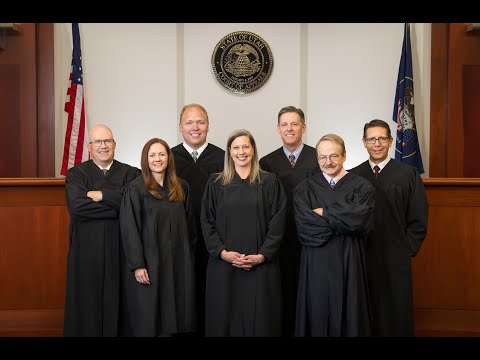
The Utah Court of Appeals heard oral argument on Tuesday in State v. Bell, an appeal by Randy Lou Bell challenging a conviction for theft of a rental vehicle. Wendy Brown argued for the appellant; Tanner Haven argued for the state. Judge Ryan Tenney presided with Judges Michelle Christiansen Forrester and John Luthy on the panel.
Bell’s counsel argued three principal points at oral argument. First, counsel said a separate subsection of the rental-vehicle theft statute operates as a required predicate — effectively an element — before the second-degree‑felony theft offense can be proven. Defense counsel relied on a published Arizona Court of Appeals decision (Chapin) and the statute’s structure, contending that a rental company must take the specified notice step in order to convert an otherwise civil breach into a criminal offense under the rental‑vehicle theft provision. Counsel argued trial counsel was ineffective for not moving for a directed verdict (or otherwise pressing the court that the state had failed to prove that element) and for failing to request a jury instruction that treated the notice/predicate as an element.
Second, Bell’s counsel urged that even if a trial strategy supported admitting the police body‑camera video, trial counsel performed unreasonably by failing to seek a curative instruction after repeated statements on the video and in testimony in which an officer described the defendant as a liar. Counsel argued the officer’s repeated credibility characterizations (the transcript records the phrase “liar” multiple times) were improper under rules restricting testimony about another witness’s credibility and that jurors tend to attribute extra weight to law-enforcement testimony.
Third, defense counsel argued prejudice under Strickland: that a permissive failure to challenge the statutory construction and to press for appropriate jury instructions created a reasonable probability of a different outcome.
The state responded that the statute is not ambiguous and that the enumerated subsections are best read as describing the offense (subsection 2) and separate obligations or administrative matters for rental companies (subsection 3). The state told the panel that the legislature later amended the code to clarify the offense’s grade and that the statute’s text and placement do not compel treating the notice language as an element. On the body-camera evidence, the state argued trial counsel had a legitimate trial strategy for introducing the recording to show the officer’s conduct and tone toward the defendant and that defense counsel’s choices on admission and cross‑examination fall within the wide range of reasonable tactical decisions.
Panel members asked focused questions about the relationship between "theft" and "stolen" in ordinary usage and whether a jury instructed only on the narrow statutory elements would have reached a different result. The judges also returned repeatedly to the law-of-lenity question: if two reasonable readings of the statute exist, whether courts must adopt the interpretation favorable to the defendant.
On the body-camera point, several panel members observed that it would likely be improper for an officer to testify on the stand that a criminal defendant is a liar, and they pressed both parties on whether admitting a video in which the officer repeatedly says the same thing is any different when no limiting or curative instruction was requested.
The panel took the matter under advisement after rebuttal. Justices said they would issue a written opinion after considering the parties’ briefs and the oral argument record.