Get Full Government Meeting Transcripts, Videos, & Alerts Forever!
Get email alerts on the Food Policy Management topic
No spam. Unsubscribe anytime.
Toledo food policy manager outlines priorities, seeks council support for food-policy council and local programs
Summary
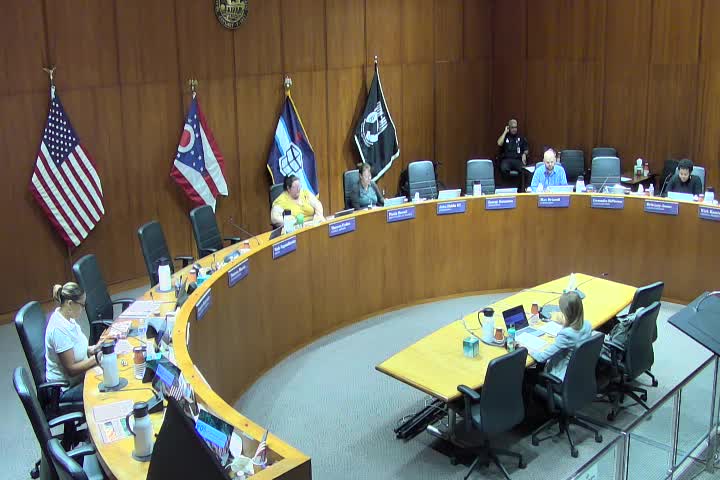
Mara Momony, the city of Toledo’s first food policy manager, told the Housing and Community Development Committee on Sept. 25 that her initial months on the job included a 56-interview listening tour and that she is asking council to support three priorities: the department’s budget request that includes funding for community catalyst projects, the creation of a Greater Toledo Food Policy Council and for the mayor to sign the Milan Urban Food Policy Pact.
Mara Momony, the city of Toledo’s first food policy manager, told the Housing and Community Development Committee on Sept. 25 that her initial months on the job included a 56-interview listening tour and that she is asking council to support three priorities: the department’s budget request that includes funding for community catalyst projects, the creation of a Greater Toledo Food Policy Council and for the mayor to sign the Milan Urban Food Policy Pact.
Momony summarized findings from more than 60 stakeholders and five themes she said will guide her first-year priorities: planning and collaboration; production; processing/distribution/markets; food access and nutrition; and sustainability. “These challenges…were shaped by decades of policy and planning decisions and therefore now require very intentional and coordinated leadership and policy solutions,” Momony said.
The timing of the work, she told council, is critical because of recent federal and state cutbacks affecting local food programs. She cited the recent termination of a Produce Perks Midwest award and broader USDA restructuring, saying those changes have strained programs and local supports. Momony also described a city-level agenda of near-term operational changes and longer-term policy work intended to reduce barriers for urban farmers and bolster local food infrastructure.
Key local steps Momony described include: applying for a USDA Regional Food Systems Partnership grant to fund community engagement and the development of a Greater Toledo Food Policy Council; running a food policy audit using the CARET (Community and Agricultural Resilience Evaluation Tool) platform as part of a national cohort; easing permitting for urban agricultural structures; proposing a flexible urban-ag microgrant program; and advancing zoning changes and incentives to promote healthy retail.
On the USDA grant, Momony said the city submitted a proposal requesting about $200,000 with a roughly $67,000 city match and expects to hear a decision in October. She said the project would fund a consultant and a part-time position to help design council governance and steward a steering committee with stipends for community members.
Momony described changes already negotiated with planning and building inspection to reduce start-up costs for urban growers: waiving a previously charged $600 special-use fee for high tunnels and creating a certificate of zoning compliance for plan-commission review. She said high tunnels used solely for urban agriculture will be exempt from the city’s building-permit process, which she estimated could save “a couple thousand” dollars for growers.
She also proposed a city microgrant program, with awards in the $1,000–$3,000 range, to support farm infrastructure, tools, packaging, labor or community engagement. Momony said the request for those microgrants is included in the 2026 budget request and that a linked Farm A Lot program will launch this fall.
Momony reported other initiatives: completing a dollar-store study that informed new two-mile spacing limits for dollar stores, and work on a complementary healthy-food overlay zoning package and economic development incentives intended to attract independent grocers and alternative retail.
Council members praised the work and pressed for details. Councilman Robert Driscoll asked about the grant timeline and funding details; Momony replied, “I believe Laura said we might hear back in October,” and confirmed the request amount and match. Driscoll asked what happens if the USDA application is unsuccessful; Momony said Finance Director Clemens indicated the city could still seek funds and that she would lead community engagement in any case.
Councilwoman Denise Williams, who said she is working on vacant-lot projects in her district, pressed for assurances that volunteer or community garden projects would not become “half-built” eyesores. Momony said she would be cautious about adding burdensome regulations but emphasized support services, planning assistance and connections to established farmers to improve follow-through.
Momony also described planned partnerships for soil testing with Bowling Green State University professor John Farver and noted Toledo’s acceptance into a national CARET cohort; she said the city expects a baseline report later this fall. She closed with three asks of council: advocate for the Housing and Community Development budget request, support creation of a food policy council (including identifying city representation), and ask the mayor to sign the Milan Urban Food Policy Pact.
Next steps Momony identified include awaiting the USDA grant decision in October, sharing the CARET audit results later this fall, moving the microgrant idea through the 2026 budget process and continuing interagency work on zoning and the Erie Street food-hub concept.