Get Full Government Meeting Transcripts, Videos, & Alerts Forever!
Get email alerts on the Trail Friendly Business topic
No spam. Unsubscribe anytime.
Committee explores a 'trail‑friendly business' program and potential liability shield
Summary
Members reviewed Fort Wayne's trail-friendly business model, discussed partnering with a nonprofit coordinator, and considered seeking a change to the state's recreational-user statute to provide liability protection for businesses that welcome trail users.
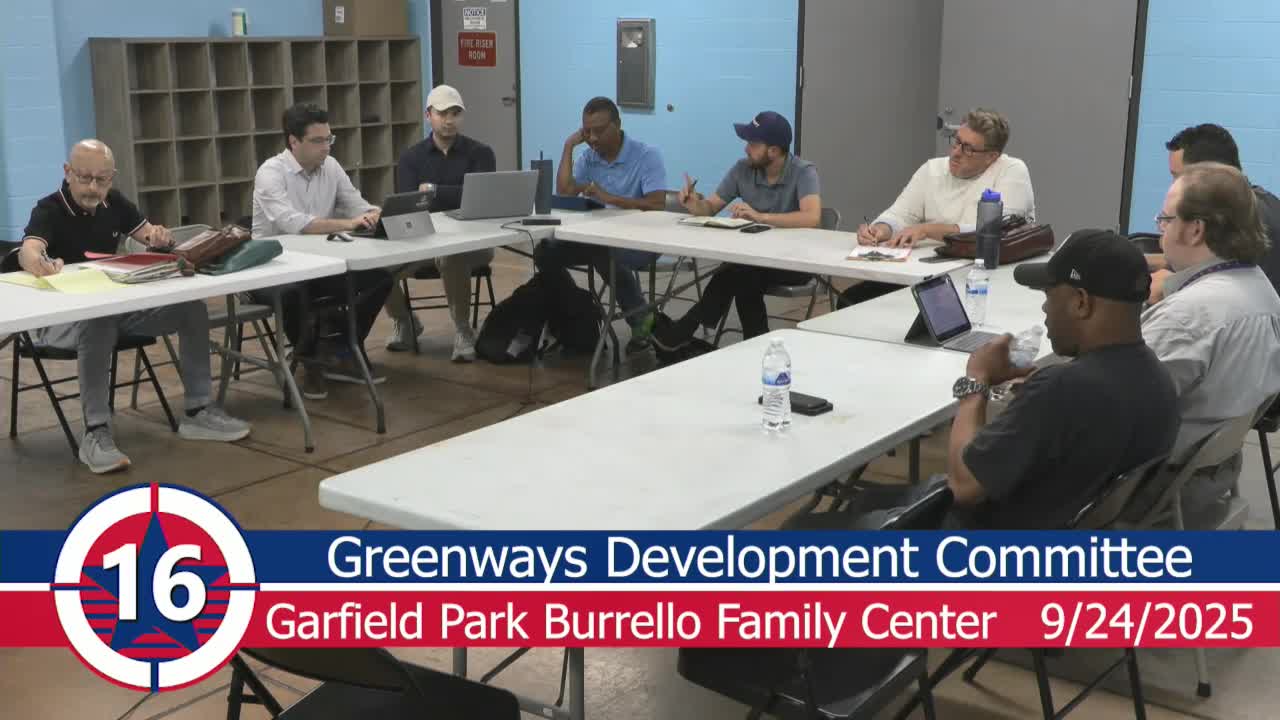
At a recent Indianapolis City meeting, committee members reviewed a trail-friendly business model used in Fort Wayne and discussed next steps to pilot a local program that would pair nearby businesses with greenway users.
A committee member summarized Fort Wayne's approach: the program asks businesses only for basic commitments such as water refill stations and public or accessible restrooms; additional services (bike repair stations, discounts) are optional. "The only commitment they ask is water refill and a public or accessible restroom," a member said.
Fort Wayne's program, run by the nonprofit Fort Wayne Trails, provides free marketing—map listings, app highlights and social-media promotions—to participating businesses. Committee members noted Fort Wayne does not require binding legal agreements; businesses complete a voluntary form. Staff reported Fort Wayne distributes a printed trail map (about 50,000 copies annually) and highlights businesses in a trail app and social channels.
Members discussed how to recruit local, independent businesses versus national chains and considered whether the city should seek a legal or insurance-based liability shield for participating businesses. One participant said he was in contact with a group pursuing an amendment to the state "recreational user" statute that would broaden protections for landowners granting trail easements and proposed exploring whether businesses could be similarly shielded. "I'm in contact with a group that's trying to amend the statute to protect people that grant easements for trails," the participant said.
Why it matters: program organizers said the model makes participation low-friction for businesses and can extend trail amenities to users (restrooms, water) without requiring the city to operate every service point. Committee members signaled the committee's role would be to pilot and recommend a model, then hand administration to a nonprofit or a city department.
Next steps: members plan to initiate conversations with local nonprofits and trail advocacy groups to identify an implementation partner and to begin gauging business interest; one member volunteered to chair a subcommittee to move those outreach efforts forward. Committee members emphasized they do not intend to operate an ongoing program long term but rather to develop and recommend a model for the city or a nonprofit to run.
Ending: The committee agreed the low-barrier Fort Wayne model offers useful lessons; members will seek nonprofit partners, continue outreach, and explore the legal question of liability protection.