Get Full Government Meeting Transcripts, Videos, & Alerts Forever!
Get email alerts on the Electric Universal Service Program topic
No spam. Unsubscribe anytime.
Maryland OHEP proposes $187 million Electric Universal Service budget; commission weighs reporting, funding requests
Summary
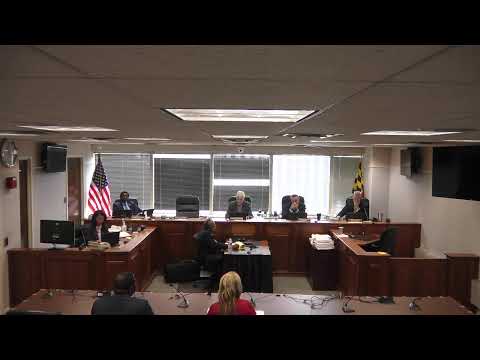
The Office of Home Energy Programs proposed a FY2026 operations plan for the Electric Universal Service Program that would spend about $187 million, with commissioners and the Office of People's Counsel urging expanded reporting and an analysis of funding needs as applications rise.
The Maryland Office of Home Energy Programs (OHEP) presented its proposed FY2026 operations plan for the Electric Universal Service Program (EUSP) and a budget that OHEP projects at roughly $187 million during a Public Service Commission hearing. Courtney Thomas Winterberg, acting director of the Office of Home Energy Programs, told the commission the agency's "mission is to help limited income Marylanders reduce their energy burden," and that the plan prioritizes bill assistance, arrearage retirement and targeted supports for households with the highest energy burdens.
Commission staff told the panel they support approval of OHEP's plan but urged the commission to seek periodic reporting to monitor enrollment, benefits and expenditures. "Staff recommends the commission approve OHEP's budget as it applies to ratepayers," Commission staff said in their filed comments, adding staff also recommended asking OHEP to deliver periodic reports so the commission can track problems and expenditures more closely.
The plan responds to changes from categorical eligibility implemented in 2024 and to a new pilot for critical medical needs. OHEP told the commission it is already serving more households through categorical eligibility and automation of applications: staff reported about 66,000 applications received so far this year compared with roughly 50,000 at the same time last year. OHEP said its FY2026 budget was prepared assuming about a 30% increase in demand.
OHEP's proposed funding mix would rely on $37 million from ratepayers and roughly $150 million from proceeds of the Regional Greenhouse Gas Initiative (RGGI), with a smaller amount from state special funds associated with Cove Point. The plan allocates about $107 million from RGGI to bill-payment assistance, $30 million from RGGI for arrearage assistance, $2.5 million for energy-efficiency measures with the Department of Housing and Community Development, $9 million for administration, $7.74 million for data systems and $200,000 for outreach, according to figures presented to the commission.
The Office of People's Counsel (OPC) recommended that the commission require a detailed analysis from OHEP of the additional funding needed to serve all eligible households if applications continue to rise. "The proposed plan does not specify the additional funding required to fully meet this projected demand," an OPC representative told commissioners, and OPC urged the commission to ask OHEP for a methodology and dollar estimate the commission could use when advising the General Assembly.
OPC also urged operational improvements including expanded, utility-specific reporting at the county level, enhanced customer notifications (for example, text messaging and mobile alerts), and a case-management model for vulnerable households with high arrears or recurring disconnection threats. OHEP said some local agencies already operate with caseworkers for complex cases and that the critical medical needs pilot in Baltimore City and Baltimore County followed a similar staffing model; OHEP cautioned that a statewide case-management mandate could require additional staff in high-volume jurisdictions.
Commissioners pressed OHEP on whether the plan's allocations and staffing would be sufficient if demand remains elevated. OHEP said the agency will provide existing monthly reports to the legislature and recommended the commission use those reports rather than create a new reporting requirement if they meet the commission's needs. OHEP also described a pilot data match with Baltimore Gas & Electric to obtain utility account information for categorically eligible households when customers do not provide it, and said initial pilot work will run for six months.
The commission took the presentation and recommendations under advisement and indicated it would issue an order or notice shortly. No formal vote on the plan was recorded in the hearing transcript.