Get Full Government Meeting Transcripts, Videos, & Alerts Forever!
Get email alerts on the Open Meetings topic
No spam. Unsubscribe anytime.
Yamhill County commissioners agree to list advisory meetings on joint calendar after public concern over quorum rules
Summary
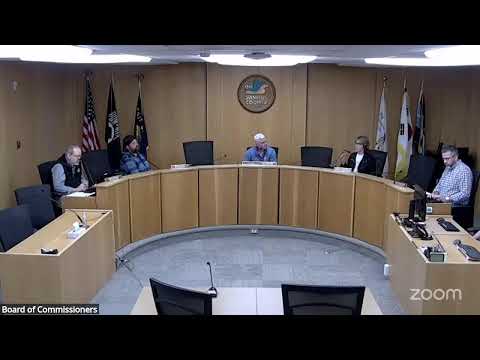
Marvin Bernards told the Yamhill County Board of Commissioners on Sept. 25 that citizens “deserve transparency” and warned that two commissioners attending an advisory board meeting together could constitute a quorum under Oregon public meeting law.
Marvin Bernards told the Yamhill County Board of Commissioners on Sept. 25 that citizens “deserve transparency” and raised concerns that two commissioners attending an advisory board meeting together could constitute a quorum under Oregon public meeting law, potentially requiring formal notice and agenda.
Bernards told the board he had observed what he described as a parks‑board meeting interaction in which Commissioner Johnson had encouraged another commissioner to attend, and he warned that “if 2 of those members attend a parks board meeting together, that constitutes a quorum of the board” and “transforms what should be a Parks Board meeting into a Board of Commissioners meeting requiring notice, an agenda and compliance with all other public meeting requirements.”
County legal counsel Christian explained the practical line the office advises: individual commissioners may attend advisory or departmental meetings to gather information, but they must avoid deliberating together outside a properly noticed public meeting. In court‑room language repeated during the meeting, Christian said, “there's nothing that precludes any individual commissioner from reaching out and interacting with those committees or with staff,” but cautioned that deliberation together without notice could be problematic.
Commissioners, county staff and counsel discussed options to reduce confusion among the public and staff. Participants noted the board has long used a “joint calendar” as an advisory tool to show events where multiple commissioners might appear, and counsel said adding advisory‑board and committee meetings to that joint calendar would increase transparency. There was no formal motion or vote to change notice rules; several commissioners and the administrator recommended continuing to avoid deliberations outside noticed sessions and to use the joint calendar “to put it all out there.”
County officials also noted practical tradeoffs if advisory meetings were routinely noticed as board special meetings: additional notice requirements would require minutes, recordings and other administrative steps. Christian said that, as an abundance‑of‑caution option, the board could notice an advisory meeting as a potential special meeting of the Board of Commissioners if the board wished to participate and deliberate publicly.
The public‑comment call for clarity prompted further discussion during the meeting about how commissioners should handle liaison duties going forward. Commissioners said they remain allowed to attend advisory meetings individually for information, but must refrain from joint deliberation unless the meeting is properly noticed. Staff and the administrator said they would implement or consider a blanket approach of listing advisory and committee meetings on the joint calendar to reduce public confusion.
No formal amendment to the county’s public‑notice practice or a vote on ordinance or policy change was taken at the Sept. 25 meeting.