Get Full Government Meeting Transcripts, Videos, & Alerts Forever!
Get email alerts on the Wildlife Enforcement Interstate Cooperation topic
No spam. Unsubscribe anytime.
Witness tells Michigan oversight panel DNR seized antlers, urges new rules for cross‑state enforcement
Summary
Chair Regas opened the Oversight Subcommittee on Weaponization of State Government hearing Tuesday by criticizing what she called excessive enforcement by the Michigan Department of Natural Resources.
Chair Regas opened the Oversight Subcommittee on Weaponization of State Government hearing Tuesday by criticizing what she called excessive enforcement by the Michigan Department of Natural Resources.
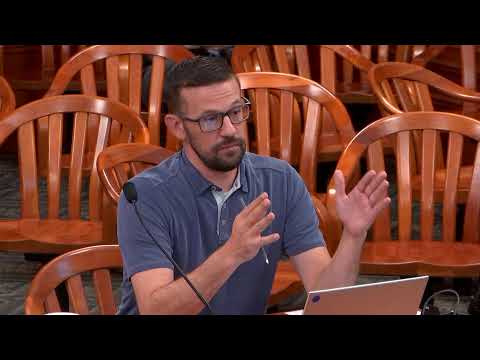
Dan Stan Dammer, who identified himself as an ordinary citizen, told the committee that a multi‑state enforcement action beginning with an Iowa wildlife inquiry led to Michigan officers seizing and holding his deer antlers for months, interrupted his work and family life, and left the returned property damaged.
Dammer described the sequence that began after a successful hunt in Iowa. He said he harvested a whitetail on Oct. 21 and took parts of the animal to a taxidermist on Oct. 4, 2021. He testified that Iowa investigators later examined a trail‑camera SD card, issued citations in September 2022 and that certified mail containing those citations was sent to his employer on Sept. 19, 2022 even though he already had legal counsel in both states.
"By weaponization, I mean the use of government tools, inquiries, surveillance data access, seizures, or administrative maneuvers, not solely to secure compliance with the neutral rule, but in a way that predictably chills protected activity, punishes lawful behavior or coerces a citizen to surrender rights," Dammer told the panel.
Dammer said Michigan officers obtained his antlers from a taxidermist in Saint Clair County on Aug. 29, 2022 and held them for many months. He said the antlers were later returned in a damaged condition — "white as snow," he testified — and that he found no paperwork establishing a chain of custody or evidence‑locker storage in the public records he received.
Dammer said the Iowa criminal prosecution was dismissed on July 23, 2023 for Fourth Amendment and Iowa constitutional violations. He said civil litigation by or against some parties remains pending.
The witness described other harms he attributed to the enforcement process: lost wages, disruption at his workplace after the certified mailing, reputational damage on social media (which he said he later challenged), and continuing uncertainty about whether the federal government might reopen charges. He said the estimated market value of the animal in Iowa exceeded $20,000, which he said increased the pressure placed on him by investigators.
Committee members questioned Dammer about why mailings went to his employer despite counsel, the condition and location of the antlers while seized, and the interstate steps that led Iowa investigators to share evidence. Representative Wolford asked whether investigators reviewed Dammer's trail‑camera SD card; Dammer answered, "Iowa did. Iowa did. Iowa did. Yep. They went through the SD card." He also said he was told no warrant ever was issued in Michigan.
Dammer asked the subcommittee to consider statutes and rules to govern interstate cooperation and to give Michigan residents a local, fast‑track forum to challenge seizures or data access. He presented an eight‑point package of reforms that he characterized as "practical, nonpartisan": requiring a Michigan warrant or court order before any seizure or search occurs on Michigan soil at the request of an out‑of‑state agency; mandated written tasking documents; a fast‑track Michigan review forum for property retention; stronger FOIA remedies with statutory damages and attorney‑fee shifting; audited logs and independent audits for sensitive database access; a prohibition on sending enforcement documents to employers absent a court order or written consent; a least‑restrictive‑means requirement before seizing non‑contraband property plus periodic judicial review; and expanded training, supervision and remedies for citizens.
Chair Regas told Dammer the committee would continue oversight of the DNR and that the panel may use subpoena power if necessary. The hearing record show the committee intends to pursue policy changes addressing several of the problems Dammer described.
Votes at a glance — procedural actions taken by the subcommittee during the hearing:
- Representative Shriver moved to adopt the minutes from the Sept. 17 meeting; the chair stated "here, no objection, the minutes are adopted." (motion adopted by voice vote; second not specified.)
- Representative Pachowski moved to excuse absent members; the chair stated "hearing no objection, the motion prevails." (motion adopted by voice vote; second not specified.)
The hearing included multiple questions from members and a planned follow‑up in which the DNR director was expected to respond to committee questions about the case and related DNR practices. The record shows committee members framed the session as oversight aimed at clarifying agency practice, FOIA responsiveness and cross‑jurisdictional procedures rather than prejudging pending civil matters.
Dammer's testimony and the committee's discussion highlight recurring oversight themes: how out‑of‑state investigations intersect with Michigan enforcement activity, how sensitive law‑enforcement databases are accessed and logged, how FOIA timing affects accountability, and when and how property can be seized or returned. He urged statutes and administrative reforms intended to provide prompt local review and clearer documentation when Michigan officers cooperate with out‑of‑state authorities.
The subcommittee adjourned after the chair excused absent members and directed staff to continue monitoring related DNR complaints and document requests.