Get Full Government Meeting Transcripts, Videos, & Alerts Forever!
Get email alerts on the Firearms Cpl topic
No spam. Unsubscribe anytime.
Michigan lawmakers propose state-run CPL reciprocity website and QR code on licenses
Summary
Lawmakers told the House Judiciary Committee that three bills would require the attorney general to host a reciprocity website updated every 60 days and add a QR code to concealed pistol licenses to help Michigan CPL holders comply with other states' laws.
The Michigan House Judiciary Committee heard testimony on a three-bill package that would create a state-run online resource for concealed pistol license (CPL) reciprocity and require a QR code on CPLs to link to that resource.
Representatives introducing the package said the bills — House Bills 4481, 4482 and 4483 — are intended to help Michigan CPL holders determine whether their license is valid in other states and to reduce accidental violations when travelers enter jurisdictions with different rules. Representative Aragona told the committee HB 4481 would require the attorney general to maintain a website listing other states’ rules and HB 4482 would require the site to be updated every 60 days; HB 4483 would require a QR code on the CPL linking to the site.
Supporters said the state has an obligation to make compliance information available because the CPL regime is created and regulated by the state. Representative Hoadley said the state is restricting Second Amendment rights through the CPL framework and therefore should help license holders understand out-of-state rules. A sponsor cited examples of travelers who were arrested after unknowingly entering a jurisdiction without reciprocity, including a case described where a flight reroute left a traveler in a jurisdiction with different rules.
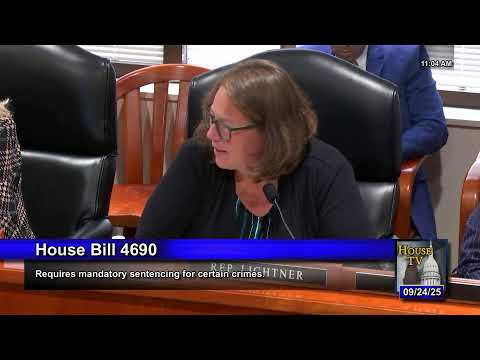
Committee members asked practical and liability questions. Chair Lightner and Representative Harris asked whether the attorney general could simply link to an existing national database instead of building a new site; sponsors said the bill’s 60-day update requirement and the sponsor’s review of currency motivated putting the onus of accuracy on a state agency. Representative Harris asked whether the bill or site would include a liability disclaimer to protect the state if a law changes quickly in another state and the state site has not yet been updated; sponsors said that could be handled by administrative rule or a disclosure that the CPL holder remains ultimately responsible.
Other factual details raised during testimony: one sponsor said about 39 states currently have some form of reciprocity with Michigan CPLs; another sponsor cited a 0.24% criminal conviction rate for CPL holders compared with about 2.4% for the general population. Committee clerk minutes record that Brian Darless representing Paladin Academy submitted written opposition to the bills.
No formal votes on the three CPL bills were recorded in committee testimony during this hearing; witnesses and legislators asked follow-up questions about maintenance, update frequency and liability language. The sponsors said the QR code would provide real-time access while traveling and that linking to a state-maintained resource would reduce the risk that an external private database had out-of-date information.
The committee recessed after the testimony and proceeded to other agenda items.