Get Full Government Meeting Transcripts, Videos, & Alerts Forever!
Get email alerts on the Public Art Policy topic
No spam. Unsubscribe anytime.
Littleton arts board to seek council OK for 1% public-works funding stream for public art
Summary
The Littleton Arts & Culture Board will present a revised 'percent for public art' policy to City Council on Aug. 26 proposing a 1% surcharge on city capital projects over $500,000 to build a cumulative fund for public artworks, with the board managing acquisitions and a staged approach that delays private-development requirements.
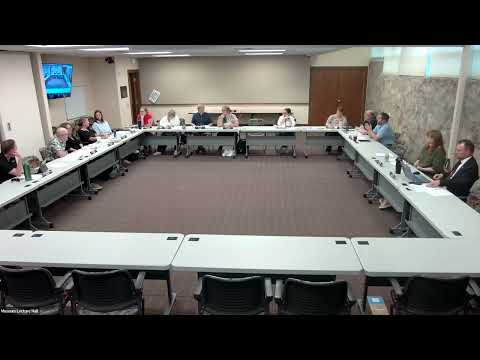
The Littleton Arts & Culture Board voted to take a revised percent-for-public-art policy to a City Council study session scheduled for Aug. 26, seeking direction to return with an ordinance that would create a 1% surcharge on qualifying city capital projects to fund public art.
The measure, presented to the board Thursday by city staff, would apply a 1% charge on completed city construction projects with final costs above $500,000, exclude routine maintenance and pavement management work, and funnel the money into a cumulative public-art fund the board would administer. "It is essentially 1% of a construction project that the city does over $500,000," said Tim, a city staff member involved in drafting the policy. "It generally will exclude things like maintenance and repair, temporary installations or repairs or maintenance, things like pavement management."
Board members and staff framed the proposal as a staged effort: the city-side (public projects) element would be implemented first; any private-development requirements would be negotiated later if Council directs. Anna, a city staff member and public-art administrator, said the rationale is to build a reliable, dedicated fund that can be used strategically rather than requiring art to be integrated project-by-project. "Let's make that 1% surcharge piece the primary funding source," Anna said. "It gives the board a lot more autonomy over how they can administer, acquire, and install public art throughout the community."
Why it matters: Staff projected the new stream would generate modest but steady revenue in a typical year — roughly $25,000–$30,000 annually — and would accumulate across years so the city could afford larger installations. Tim said modeling of public projects over a recent four-year period suggested total qualifying spending that produced an average in the mid‑$20,000s per year in percent revenue. "In a normal year, something around $27,000 a year," he said. The board emphasized that the sum can be retained and pooled until there is enough to commission larger works.
Key policy elements discussed: - Threshold and exclusions: The policy sets a $500,000 qualifying threshold and excludes routine maintenance, pavement overlays and fleet replacement; major rebuilds or downtown development projects would typically qualify. "A rebuild would probably qualify," Tim said when asked whether a street rebuild would count. - Funding use and administration: Funds would pay for acquisition, installation and maintenance of public art. The board recommended allowing up to about 15% of the fund balance for program administration and noted museum and general-fund lines would continue to cover some conservation costs. - Selection and contracting: The board would use its existing Public Art Subcommittee and the fine-arts selection process (solicitations, RFQs/RFPs, board recommendation) and then forward contracts to City Council for final approval. - 'Littleton twist': Rather than primarily requiring integration of art into each qualifying project and using fee-in-lieu only as a fallback, the policy prioritizes collecting the surcharge into a central fund and using that balance to place art in identified 'public-art deserts.' "It gives the Arts and Culture Board a ton more flexibility than they would have to if... integrating artwork into a construction project," Anna said.
Board members asked for clarity on ambiguous cases and potential opt-outs for initiatives like the Safer Streets program; staff said Council could direct specific exclusions when it reviews an ordinance. Denise, a board member, noted political sensitivity around the private side of a percent program and said the board intends to start with the public side so staff and council can work through complexities first.
The board plans to make a brief presentation at the Aug. 26 study session and hopes to return to Council for first and second readings quickly if Council gives direction. Anna invited board members to attend the study session to show support. "Please come next Tuesday night... it's wonderful to show the support," she said.
Next steps: If Council gives the green light, staff said they would refine the policy language with the City Attorney on exclusions and program details and prepare an ordinance and implementation plan for the board and Council to consider.