Get Full Government Meeting Transcripts, Videos, & Alerts Forever!
Get email alerts on the Active Transportation topic
No spam. Unsubscribe anytime.
City rolls out pilot protected bike lanes but board urges TMP update and clearer prioritization
Summary
City staff described a Safer Streets rollout of several pilot protected-bike-lane projects; board members said corridor selection did not align clearly with the existing TMP bike-priority map and urged a full Transportation Master Plan update to set priorities, funding and coordination frameworks.
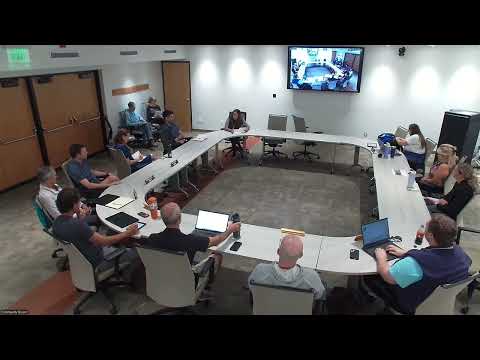
Transportation staff told the board on July 24 that the city is implementing a Safer Streets pilot that will add temporary and semi-permanent protection to several bike corridors this year and next.
A staff speaker said the pilot program favors “low-hanging fruit” corridors where painted bike lanes and available right-of-way let the city add buffers and delineators with minimal impact to on-street parking. The staff member said the city is installing protective elements on corridors including portions of Windermere, Bellevue, Phillips and Pennsylvania, and that paint and delineator choices were adjusted to avoid wasting funds when repaving is imminent.
Board members pushed back on how corridors were selected. One board member said only “one and a half” of the first set of projects were on the TMP’s existing bike-priority map and asked that future installations be evaluated against a clearer priority list. The member and others asked staff to weight TMP priorities and a high-injury network more heavily when deciding where to install protections next.
Staff acknowledged “lessons learned” from the first year of safer-streets work and said a TMP update would help reconcile differences between projects already underway and a longer-term network plan. Staff also explained coordination challenges: utility and drainage work, pavement-management schedules and right-of-way constraints sometimes require staged or incremental project approaches.
Board members asked for clearer performance and phasing plans, and requested that future protected-bike-lane projects be routed to align with the TMP, connectivity priorities and community-engagement processes so neighborhoods understand trade-offs such as reduced on-street parking.
No formal board action was taken; staff said they are preparing a memo to the city manager’s office describing workload, resource needs and a proposed TMP schedule to clarify procurement, funding and sequencing of multimodal projects.