Get Full Government Meeting Transcripts, Videos, & Alerts Forever!
Get email alerts on the Municipal Operations topic
No spam. Unsubscribe anytime.
Town manager reports trash strike resolved, opioid settlement sign-ons and municipal research into electronic voting
Summary
The town manager told the Select Board that trash collection workers have resumed typical services, that Danvers joined opioid settlement agreements with multiple manufacturers and that staff researched electronic voting ("clickers") for town meeting and will present options for the board.
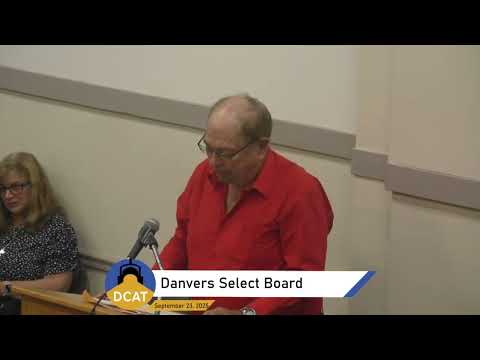
At the Sept. 23 Select Board meeting the town manager reported that trash collection services paused by a regional contractor’s labor dispute had resumed and that the town was restoring normal yard‑waste and bulky-item pickup schedules in coming weeks.
"They have come to a resolution. They have resumed all typical services as of Monday," the town manager said, addressing residents' concerns about delayed bulky-item and leaf pickups. The manager directed residents holding bulky‑item stickers to schedule pickups beginning the week of Sept. 29 and said sales and scheduling for new bulky‑item stickers would open the week of Oct. 6. Staff expect the regular leaf pickup schedule in October to proceed on time.
The town manager also said Danvers signed onto opioid settlement agreements for multiple manufacturers in addition to the previously announced Johnson & Johnson settlement; the health department and board of health will develop a proposed plan for use of settlement funds and report back to the Select Board.
Separately, the manager reported research into electronic voting systems for town meeting (commonly called "clickers") and presented a summary of other Massachusetts municipalities’ experiences. Staff noted cost estimates vary — rental or purchase options were cited in other towns; Andover rented systems at roughly $40,000 per year in recent examples but staff showed lower quotes exist and recommended the board could appoint a committee or moderator‑led review group to explore options and recommend a path. The town manager said many operational reasons for electronic voting (efficiency, private voting) are already addressed in Danvers' town meeting rules and that a local committee could weigh privacy, cost and operational tradeoffs.
Ending: Town staff will continue implementing restored solid‑waste services, develop a plan for opioid settlement funds with the health department and, if the board directs, assemble a working group to explore electronic voting options and cost models.