Get Full Government Meeting Transcripts, Videos, & Alerts Forever!
Get email alerts on the Criminal Evidence Appeal topic
No spam. Unsubscribe anytime.
Utah Court of Appeals Hears Appeal in State v. William Paul Mike Over Admissibility of Statements and Jury Instruction
Summary
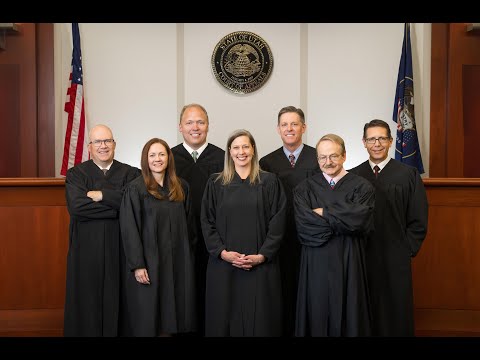
At Southern Utah University on Friday, the Utah Court of Appeals heard oral argument in the criminal appeal State v. William Paul Mike, where defense counsel said three separate evidentiary errors undermined his client’s conviction and the state urged the court to find any errors harmless.
At Southern Utah University on Friday, the Utah Court of Appeals heard oral argument in the criminal appeal State v. William Paul Mike, where defense counsel said three separate evidentiary errors undermined his client’s conviction and the state urged the court to find any errors harmless.
Benjamin Miller, representing William Paul Mike, told the three-judge panel that the conviction should be reversed because (1) a police officer was allowed to give a lay opinion drawing conclusions about the cause of the victim’s injuries, (2) the officer’s testimony and the prosecutor’s closing argument admitted testimony that functioned as evidence of other bad acts in violation of Rule 404(b), and (3) a neighbor was permitted to repeat the victim’s narrative as an “excited utterance” when the circumstances showed reflective thought had begun.
Those issues were the focus of extended questioning from the court, which pressed both sides on where the line falls for an excited utterance and whether jurors could have been confused about which act supported an intoxication-based charge.
Why it matters: The appeal centers on whether the trial court improperly admitted evidence that was used to suggest propensity for violence and whether jurors were left without clear, unanimous grounds for a statutory intoxication count. If the appellate court finds prejudicial error, the conviction or portions of the verdict could be vacated and remanded for a new trial or further proceedings.
Defense argument and evidence noted by counsel
Miller told the court that the neighbor’s testimony and the way the neighbor repeated the victim’s account went beyond what the excited-utterance exception permits because the neighbor had escorted the victim inside, locked the door and questioned her before she provided a narrative. “Mister Mike’s conviction was undermined by 3 errors,” Miller said, summarizing his three claims.
Miller also argued that an exchange in the back of a patrol car — in which the defendant allegedly asked, “How much time can I get for assaulting a police officer?” — was converted by the officer’s testimony and the prosecutor’s closing into evidence suggesting assaultive propensity. Miller said that, even if the remark was made after the charged events and while the defendant was detained, the officer’s commentary and the prosecutor’s use of the comment in closing impermissibly suggested other bad acts in violation of Rule 404(b).
Miller pointed to trial evidence that he said undercuts the state’s theory, including a split verdict at trial, questions about the sister’s credibility and an expert who testified he could not definitively rule out a fall as the cause of the victim’s injuries.
State responds: discretion, harmlessness, and the record
Wilson Dussep, for the State of Utah, told the court that the trial court’s rulings were within its discretion and that any disputed evidence was not prejudicial. Dussep said the prosecutor’s closing did identify the relevant act supporting the intoxication-based disturbance charge as the assault inside the family home and argued that the officer’s comment (and the video in which it appears) were part of the direct narrative the state relied on to show intoxication.
“The prosecutor specifically says he unreasonably disturbed [his] sister in their mother’s home, which is a private place,” Dussep said, arguing that the closing sufficiently focused the jury on the incident inside the home for the intoxication count.
Court’s questions and evidentiary law in dispute
The panel repeatedly questioned the parties about (1) what facts remove a statement from the excited-utterance exception, (2) whether a remark made in the back of a patrol car should be treated as evidence of intoxication in a public place or as conduct in a private place for unanimity purposes, and (3) whether the officer’s testimony functioned as testimony about other bad acts that required limiting instructions or a different evidentiary ruling.
One judge asked whether the question is “whether the person is still under the stress” of the startling event or whether an objective “reasonable person” standard controls; the court discussed case law drawing distinctions among responses to questions, whether the setting is familiar, and whether locking a door and sitting down are facts that can cut against the excited-utterance exception. The panel noted that excited-utterance analyses consider the totality of circumstances and review the trial court’s ruling for abuse of discretion.
On unanimity, the court examined whether jurors could reasonably disagree about whether the intoxication-related disorder arose inside the home or later in the police car — a difference that could change the statutory requirement (private place vs. public place) and therefore how the jurors must be unanimous. The parties agreed there is no clear controlling case law answering whether a patrol car on a public street is treated as a public place for this statute, and the court pressed on whether the prosecutor’s closing sufficiently resolved that ambiguity for jurors.
Other facts mentioned in argument
- Defense counsel emphasized the victim’s high blood-alcohol reading (referred to in argument as 0.38) and said the victim’s credibility and the expert’s inability to rule out a fall as the cause of injury were central to the prejudice claim. - The defense noted the jury returned a split verdict and argued that improper propensity evidence and officer commentary could have affected the guilty finding on assault. - The state pointed to the existence of video and other indicia of intoxication to argue any contested statement was cumulative and therefore not prejudicial.
Outcome and next steps
After hearing argument, the court took the case under advisement and said it will issue a written decision resolving the appeal. No ruling was announced from the bench at the special session.
Notes on the proceeding
The session was part of an annual Utah Court of Appeals outreach event at Southern Utah University; Judge Gregory Orm opened the sitting and thanked SUU staff and others for hosting. The panel heard oral argument on State v. William Paul Mike and then moved to a planned question-and-answer program following the argument.