Get Full Government Meeting Transcripts, Videos, & Alerts Forever!
Get email alerts on the Governance Compliance topic
No spam. Unsubscribe anytime.
Commission receives annual Open Meetings and Public Records training; counsel warns against acting outside authority
Summary
General Counsel Jesse Gentry delivered the commission’s annual training on the Public Records Act and Open Meetings Act, reviewed electronic communications rules, and cited the North Carolina Board of Dental Examiners v. FTC decision as a caution against regulatory overreach.
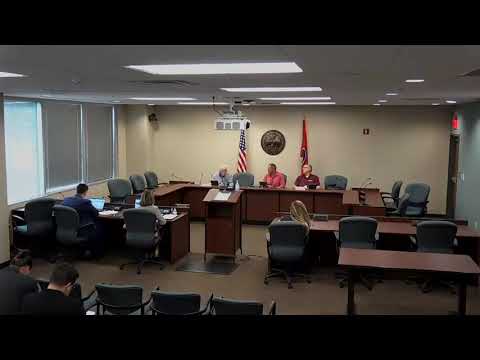
The Tennessee Athletic Commission received its annual Open Meetings and Public Records Act briefing Sept. 22, during which General Counsel Jesse Gentry outlined what counts as a public record and what constitutes a meeting under state law.
Gentry emphasized transparency obligations and examples of meeting conduct. "Generally, a meeting is anytime there's gonna be either 1 or or more than 1 board member, present," he said while explaining that the Open Meetings Act seeks to prevent board business being conducted outside public view. Gentry noted that chance encounters (for example, meeting someone at a grocery store) and casual conversations are not meetings, but that coordinated communications or deliberations about board business outside a properly noticed meeting can constitute a violation.
The presentation covered records that are public (documents, photos, electronic files) and typical exclusions (medical records, certain confidential financial records). Counsel also explained electronic participation options, notice requirements for meetings posted to the commission’s website, and the requirement to allow public participation.
Gentry reviewed enforcement and consequences: actions taken in violation of the Open Meetings Act can be declared null and void, and litigation can result in liability for costs and attorneys' fees. As an example of regulatory overreach, he described the U.S. Supreme Court decision in North Carolina Board of Dental Examiners v. FTC, in which the court found a state board had acted outside its authority when it sought to regulate teeth‑whitening services; the decision underscores limits on boards' authority and potential antitrust concerns.
Ending: Counsel said the commission's supervising official reviews board actions and that staff can help members with agenda or public‑records questions; commissioners were reminded to consult staff before taking actions outside a noticed meeting.