Get Full Government Meeting Transcripts, Videos, & Alerts Forever!
Get email alerts on the Public Participation Rules topic
No spam. Unsubscribe anytime.
Charlotte County board keeps 5-minute public-speaking standard but allows board majority to shorten or extend limits
Summary
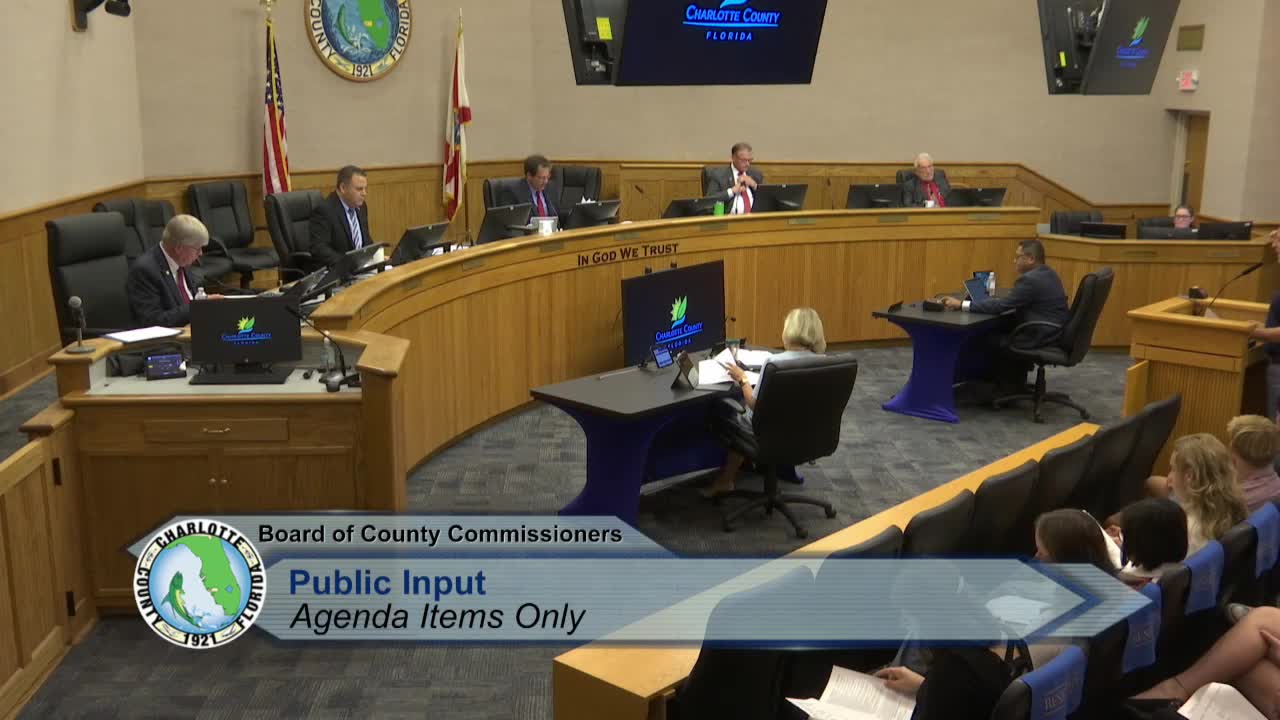
The Charlotte County Commission voted to adopt a procedural change that keeps the default five-minute public-comment limit for hearings but lets a majority of commissioners — rather than the chair alone — shorten or extend time during unusually long or technical hearings.
Commissioners voted unanimously Tuesday to adopt an amendment to the county's rules of procedure that leaves the default public-comment time at five minutes but changes who may modify that time.
The change removes language that allowed the chairman alone to vary speaker time and replaces it with a requirement that any change be made by consensus of the board. County Attorney Jeanette Knowlton and the county's rules drafters told the commission the revision shifts the authority from one person to a majority vote of the board.
The matter drew public comment at the meeting. Rob Robbins, a local resident, urged commissioners to keep the five-minute default and to avoid allowing on-the-fly reductions that could limit public participation at lengthy land-use hearings. Robbins said long hearings have in the past produced substantive outcome benefits for the county because extended public testimony prompted additional concessions from developers.
Commissioners who spoke during the discussion said the change is intended only to give the board flexibility in unusual circumstances. Commissioner Chris Doherty said he expected the five-minute standard to remain in nearly all meetings but welcomed the option to grant additional time by board decision for technical witnesses or extraordinary hearings. Commissioner Bill Truex and others said the amendment also prevents a single official from unilaterally shortening input time in contentious meetings.
County attorney staff advised the board that the practical effect is limited because other language already permits the board to extend or limit testimony; the revision merely clarifies that the change should be a board decision rather than a chair-only call.
The commission approved the change unanimously. Staff said the rule will be applied to future public hearings and that clerks and staff will circulate the updated rules to meeting attendees and to the county website.