Get Full Government Meeting Transcripts, Videos, & Alerts Forever!
Get email alerts on the Corrections Pharmacy topic
No spam. Unsubscribe anytime.
Committee approves TDOC pharmacy addendum after members press for cost breakdown
Summary
A legislative committee approved a one-year participating addendum with Clinical Solutions to operate the Tennessee Department of Correction's on-site pharmacy while several members pressed the department for a detailed explanation of what they described as a roughly 40% contract increase.
A legislative committee voted to approve a one-year participating addendum between the Tennessee Department of Correction (TDOC) and Clinical Solutions under a multistate cooperative purchasing agreement (MCAP), extending the agreement to Sept. 30, 2026, with a maximum liability the department reported as $5,790,343.
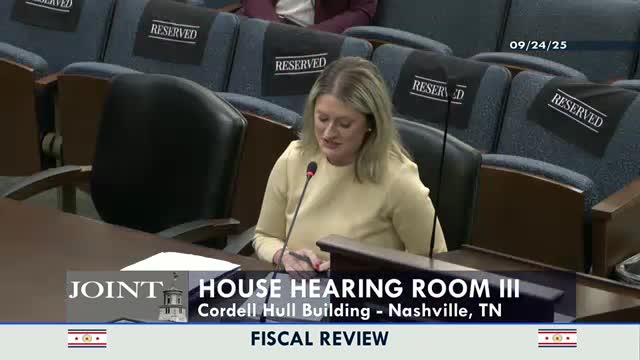
The addendum, presented by Ashley Fuqua, TDOC legislative director, covers operation of the on-site pharmacy at the Low Security Special Needs facility in Nashville and the packaging and distribution of pharmaceuticals to inmates across TDOC-operated facilities. Fuqua told the committee the contract participates in MCAP so Tennessee can leverage multistate purchasing power.
Committee members said the dollar increase demanded more explanation. Representative Bridal said the addendum represents roughly a 40% year-over-year increase and asked the department to provide a line-item breakdown showing whether the increase stems from price inflation, higher utilization, high-cost drugs such as hepatitis C treatments, or other factors. Fuqua said pharmacy costs and utilization can vary month to month, that TDOC is statutorily required to provide inmate health care, and that the cooperative agreement subjects Tennessee to MCAP terms while providing broader purchasing power. Fuqua also cited growing treatment needs, including hepatitis C and mental-health-related prescriptions.
Chairman Gardiner asked TDOC to return at the committee's next meeting with five years of demographic and utilization statistics showing the populations now entering TDOC custody and any corresponding change in pharmaceutical needs. Cindy Campbell raised concerns that violence and extortion within prisons can generate additional medical costs and urged the committee to review operating practices as a potential driver of health-care spending. Another committee member said legislators must decide the level of care they require and accept the fiscal consequences.
After discussion, the committee moved, seconded and approved the addendum. Committee members did not record a roll-call tally in the transcript; the chair announced, "Ayes have it. Contract is approved."
The committee requested TDOC provide a detailed analysis of the $5.79 million maximum liability and five years of inmate demographic and pharmaceutical-utilization data at the next meeting so members can better evaluate the drivers of the increase.
Why this matters: TDOC health-care spending is part of the state operating budget and can rise with changing inmate needs and expensive specialty drugs. Committee members pressed for more granular data before supporting future contract increases, signaling oversight interest in how inmate health care costs change year to year.
What's next: TDOC agreed to provide the requested breakdown and demographic information at the committee's next meeting.