Get Full Government Meeting Transcripts, Videos, & Alerts Forever!
Get email alerts on the Infrastructure Sewer topic
No spam. Unsubscribe anytime.
Toledo council approves $16 million loan agreement to replace collapsed Arlington Avenue sewer line
Summary
City council voted to authorize a loan agreement with the Ohio Water Development Authority not to exceed $16 million to replace a collapsed section of the Arlington Avenue sanitary sewer after months of bypass pumping and evidence the 95-year-old clay tile line is more extensively damaged than first thought.
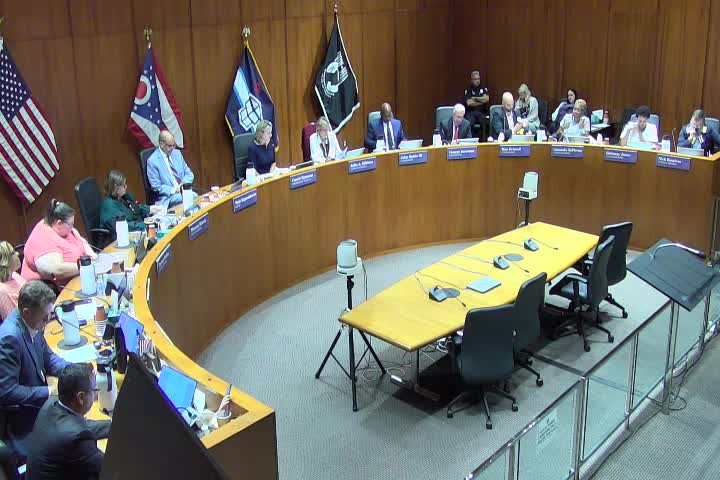
The Toledo City Council on Sept. 23 authorized the mayor to apply for and enter into a loan agreement with the Ohio Water Development Authority (OWDA) in an amount not to exceed $16 million to fund replacement of a collapsed sanitary sewer on Arlington Avenue.
The mayor and council approved Ordinance 4 42-25 after a presentation by Doug Stevens, director of public utilities, who said the city originally planned two spot repairs and relining for about $8 million but found the pipe damage extensive enough that full replacement is now necessary. "We believe it's more cost effective and will be a better long-term solution to completely replace the line," Stevens said. He said crews have excavated a shaft about 55 feet deep and that heavy clay debris suggests the top of the existing clay tile sewer has likely collapsed.
The council voted to waive the formal competitive bidding provisions of Toledo Municipal Code Chapter 187 and to authorize borrowing, the appropriation and expenditure of loan proceeds into the sanitary sewer replacement fund, and a $60,000 appropriation for loan administration fees and miscellaneous project costs. Stevens estimated the work will take about nine months and finish by next June, including tunneling roughly 1,300 feet and tying the new pipe into the system.
Why it matters: The city has been bypass-pumping flow around the collapse for months; Stevens told council that bypass pumping costs were running about $500,000 per month. The OWDA loan will allow the city to finance ongoing bypass-pumping costs and the construction work; Stevens said the city could retroactively include roughly 60 days of bypass costs in the loan to reduce immediate capital pressure.
Materials and risk: Stevens said the replacement pipe will be a polymer product (identified in the hearing as a "Hobas" type pipe) selected for durability at the project depth and for tunneling and jacking installation; he said the material should have a lifespan longer than 50 years. He contrasted that choice with the city's more typical use of PVC or concrete pipe for other repairs. Stevens warned that any project at 45–55 feet of depth carries risk: "At 50 feet of depth, I can't guarantee anything," he said, adding the city does not expect costs to exceed the $16 million estimate but acknowledged likely smaller additional costs such as filling sinkholes discovered during work.
Council questions and follow-up: Councilmember Nicole Mipes asked about pipe material and whether the city would use PVC; Stevens replied the polymer pipe is recommended for this depth and installation method and noted he would welcome future discussion about PVC for other projects. Councilwoman Williams asked whether the Arlington work was the same as the Woodruff project; Stevens said it is not—the Woodruff work involves a 60-inch main with a leaking joint and a custom sleeve, and is separate from the Arlington replacement. Councilmember Monica McPherson asked about winter impacts for neighbors; Stevens said contractors will maintain the roadway, run bypass piping through the winter, and the sewer division will continue mitigation steps for odors that arose while old sewage was pumped out of stagnant areas.
Financing detail: Stevens said the city expected an interest rate in the neighborhood of 3.5 percent for the OWDA loan but noted staff may explore other loan options later to lower cost. The ordinance authorizes a dedicated source for repayment and permits the mayor to enter contracts in amounts not to exceed the loan.
Outcome and next steps: Council approved Ordinance 4 42-25 by roll call. Stevens and city staff will proceed with OWDA application, project contracting, and neighborhood communication as the project moves into the design and construction phases. The council packet and the ordinance title indicate the sanitary sewer replacement fund as the deposit/repayment source and direct the mayor to prepare plans, acquire rights of way as appropriate, and execute contracts for the work.
The city did not provide a precise final interest rate on the record at the Sept. 23 meeting; Stevens said the approximate rate was "right in the neighborhood of about 3.5%" and that staff will pursue lower-rate options if feasible.