Get Full Government Meeting Transcripts, Videos, & Alerts Forever!
Get email alerts on the Ethics And Governance topic
No spam. Unsubscribe anytime.
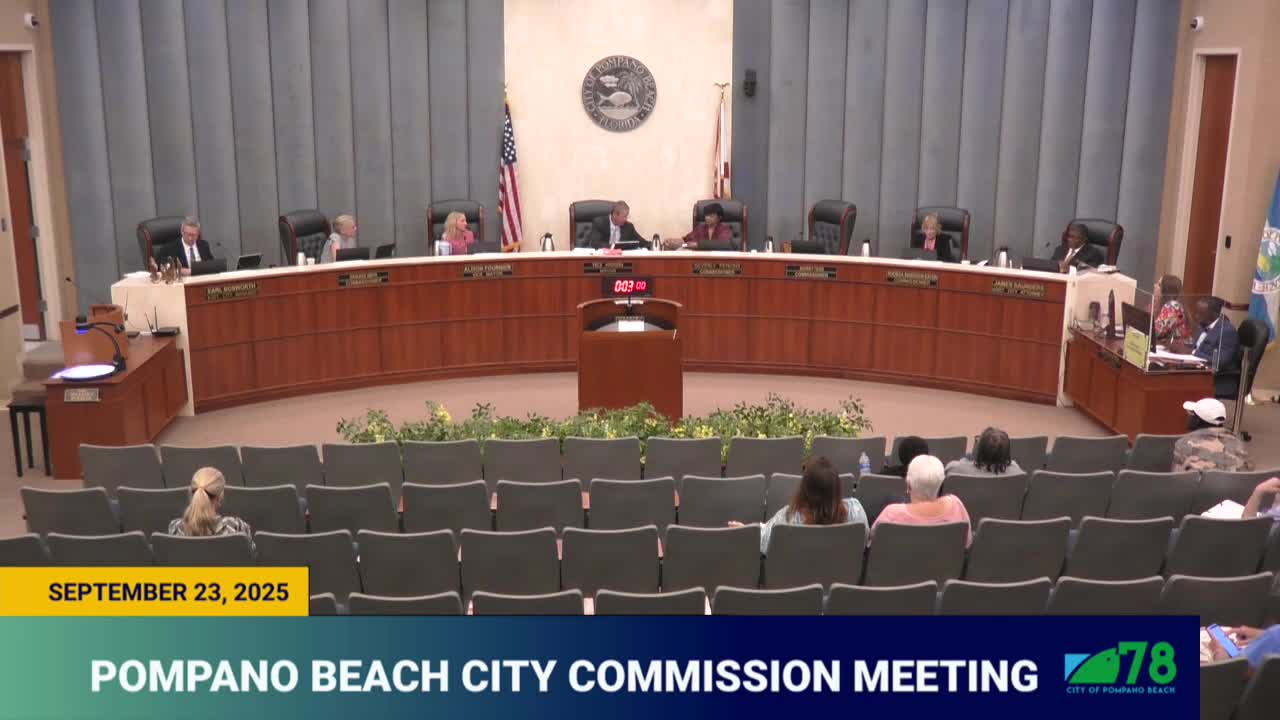
Pompano Beach mayor moves to put censure of commissioner on next agenda after staff complaints; commission votes 3‑2 to schedule discussion
Summary
Mayor Rex Harden asked the commission to place a censure item on the next agenda regarding Commissioner Audrey Fessick’s social‑media posts naming city employees; commissioners debated free speech, staff safety and remedies and voted 3‑2 to add the item to the next meeting.
Mayor Rex Harden told the City Commission on Sept. 23 he would place an item on the next regular agenda to consider a formal censure of Commissioner Audrey Fessick over social‑media posts that city employees say have created fear and a hostile work environment.
Harden said staff had provided letters reporting that employees felt targeted and threatened and that human resources had limited options because the city cannot discipline an elected official. “I’m going to ask that we put an item on our next agenda asking for the censure of City Commissioner Audrey Fessick based upon what she’s been doing on social media,” the mayor said.
The proposal provoked extended debate. Commissioner Beverly Perkins said she opposed a formal censure and urged additional private outreach first: “Before we get to this point… the city attorney, the city manager sit down and speak with her again,” Perkins said. Commissioner Sigerson Eaton also recommended more internal discussion and mediation before a public censure.
Commissioner Jayne Smith framed the matter as a civil‑liberties issue and opposed restricting elected officials’ speech: “I will never support anything that censors someone for using their freedom of speech. Never,” Smith said.
Vice Mayor Allison Fournier and other commissioners emphasized staff concerns about safety and reputational harm tied to posts that named employees and alleged misconduct. Harden and supporters said commissioners are among the only bodies that can act when employees feel targeted, because administration lacks authority to discipline elected officials.
After discussion the commission voted to place the censure matter on the next regular agenda. The roll call on that motion recorded three votes in favor and two opposed: Commissioners Sigerson Eaton and Smith voted yes; Commissioners Perkins and Vice Mayor Fournier voted no; Mayor Harden voted yes. The motion passed 3‑2.
Why this matters: the vote does not itself censure the commissioner; it schedules a public meeting for further discussion and possible action. Supporters said scheduling the item is needed so employees can present evidence and the public can hear all sides; opponents said a censure risks suppressing political speech and urged managers and legal staff to pursue nonpublic remedies first.
Next steps: the item will appear on the commission’s next regular agenda. Commissioners said Commissioner Fessick will be invited to participate in that meeting. Any formal censure would be a separate vote following additional public discussion.