Get Full Government Meeting Transcripts, Videos, & Alerts Forever!
Get email alerts on the Street Network Connectivity topic
No spam. Unsubscribe anytime.
Delaware City committee approves temporary pilot to connect Westgate Drive to Champion Court after resident objections
Summary
The Public Works & Public Utilities Committee voted to send a proposal to city council to create a temporary, paved vehicular connection between Westgate Drive and Champion Court as a 12‑month pilot; residents urged the committee not to open the street while staff said the link would improve serviceability for large trucks and emergency access.
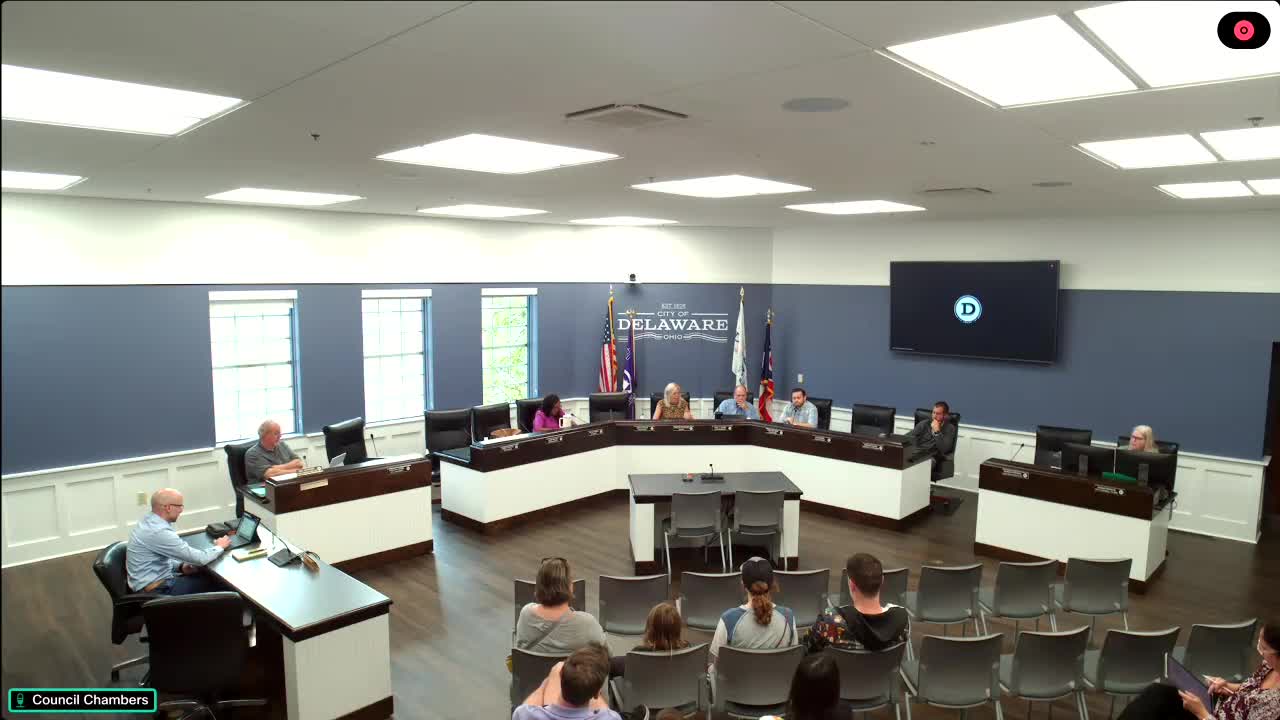
The Delaware City Public Works & Public Utilities Committee voted 3‑0 on Sept. 23 to forward a proposal to city council to build a temporary paved connection between the end of Westgate Drive and Champion Court as a 12‑month pilot.
The vote came after more than an hour of public comment and detailed staff presentation. Public Works Director Bill Perino outlined staff’s rationale, saying the existing turnaround at the end of Westgate is “about 46 to 48 feet diameter” and too small for the city’s larger service vehicles. Perino said the city counted 16 cars in two hours exiting the Champion Court neighborhood and that his delay studies showed peak delays of about 32 seconds at nearby intersections. “I don’t see how it’s possible” that the connection would become a major cut‑through, he said, adding the city could barricade or remove the pavement if the pilot produced problems.
Residents who live on or near Westgate pressed the committee to preserve the street as a dead end. Amy Eiken, who said she lives at 61 Westgate Drive, told the committee she is “against the cut through at this point” and asked what compensation, if any, homeowners would receive if the connection impacted yards or driveways. Abby Buckerfield of 17 Westgate Drive said Westgate is “a stable neighborhood” with no planned development, and she disputed the city’s serviceability justification for the connection.
Other residents raised concerns about property values and traffic safety for children. Charles Lake said high‑school drivers would use the link as a shortcut; Joe Lake and others questioned the claim that fire and emergency services could not already access the area. David A. Fisher of 143 Champions Court said he bought his house for its dead‑end character and worried about increased through traffic.
Perino described alternatives the city considered: doing nothing; building a larger full cul‑de‑sac (which he said would be more expensive and would substantially impact homes at the end of Westgate); or making a short paved connection—Perino favored the short connection as a low‑cost way to improve serviceability for plows, refuse trucks and emergency access. He said a full cul‑de‑sac would require engineering, storm‑sewer work and likely property impacts, while the small connection would be “a small amount of pavement” and reversible if necessary.
Committee members discussed options including a temporary or “soft” opening, a 12‑month pilot period and community follow‑up. Councilmember Frasier said he supported trying a connection where the “juice is worth the squeeze.” Councilman Corey Hoffman proposed the motion to send a temporary pilot to council; Miss Frasier seconded. The roll call was recorded as: Hoffman — Yes; Frasier — Yes; Mayor Bridal — Yes.
The committee instructed staff to: (1) prepare a council resolution establishing a temporary road connection and accompanying short no‑parking zone where needed; (2) treat the work as a pilot with a 12‑month review period and the ability to barricade or remove the pavement if the pilot produced unacceptable traffic impacts; and (3) perform baseline and follow‑up traffic counts and solicit resident feedback during the pilot.
Perino said the city would pave the small connection so it could be plowed and would remove brush and trees in the alignment. He also told the committee a barricade and grass restoration would be feasible if the pilot generated unanticipated problems. The staff packet that accompanied the agenda included photos and schematic circles showing the existing end of Westgate, a conventional small cul‑de‑sac (about 76–78 feet), and the larger cul‑de‑sac used for roads longer than 250 feet.
Votes at a glance
- Motion: Send Westgate Drive temporary pilot connection to council for consideration (temporary pilot; pavement, short no‑parking zone, 12‑month review). Mover: Corey Hoffman. Second: Miss Frasier. Vote: 3‑0 (Hoffman, Frasier, Mayor Bridal).
Context and next steps
Perino said staff will bring a resolution to council describing the temporary pilot and the associated no‑parking zone typically required at new intersections. Staff will collect baseline traffic counts before opening and follow up at intervals during the pilot; the committee also agreed to community outreach and a follow‑up meeting if residents asked for a review. If the pilot showed significant cut‑through traffic, Perino said the city could barricade or partly remove the pavement and maintain a pedestrian sidewalk connection if desired.