Get Full Government Meeting Transcripts, Videos, & Alerts Forever!
Get email alerts on the Public Works topic
No spam. Unsubscribe anytime.
Richmond Public Works outlines operations, illegal-dumping crackdown and tree-plan timeline
Summary
Department of Public Works officials briefed the Government Operations Committee on daily services, progress on audits, a new urban tree-canopy assessment and steps to curb illegal dumping, including surveillance and prosecutions.
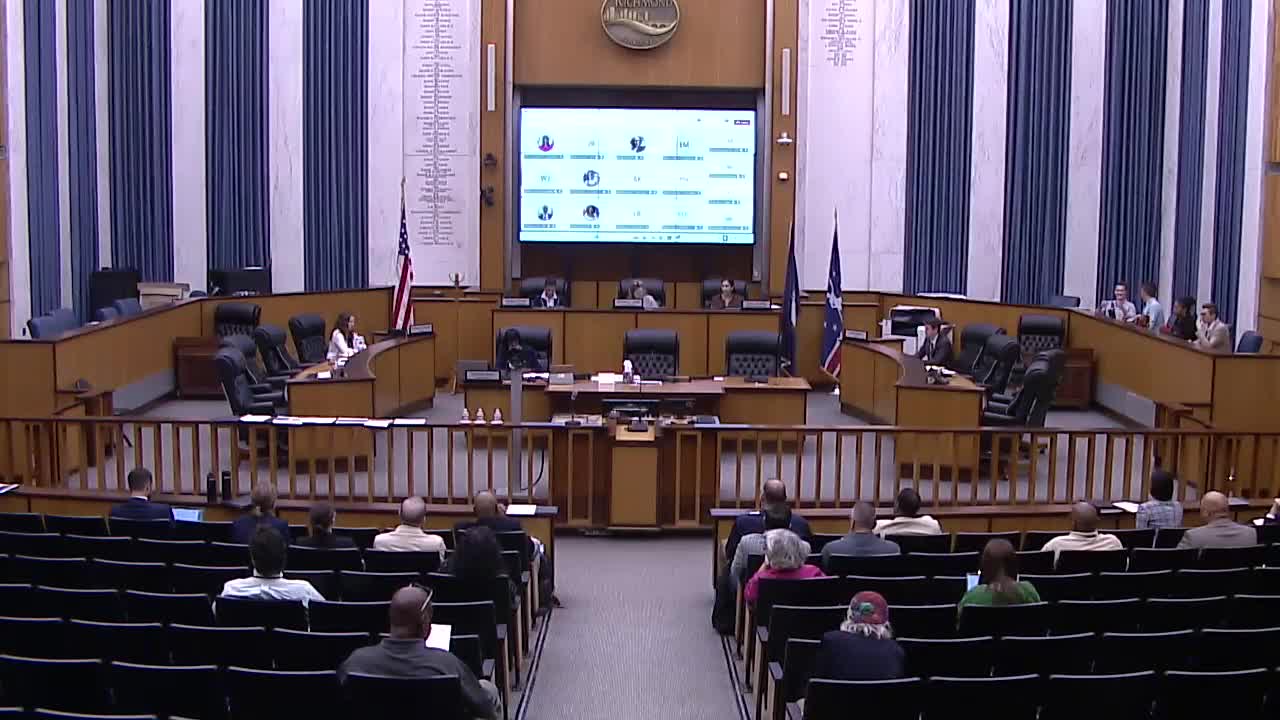
The Richmond Department of Public Works told the Government Operations Committee on Oct. 1 that its operations and maintenance division manages core services across urban forestry, street cleaning, grounds and roadway maintenance, solid waste and streetlight systems while responding to several open audit recommendations.
DPW Deputy Director Terrence Robinson and Director Bobby Vincent presented staffing, workload and program details and answered committee questions about illegal dumping, tree canopy work and audit follow‑ups. Robinson said operations and maintenance includes six major divisions, roughly 382 full‑time equivalents and 30 funded vacancies. He described divisions that maintain more than 76,000 occupied tree sites (roughly 120,000 total tree sites), 5,000 lane miles swept annually, about 80 miles of bike lanes today that the department expects to grow to more than 100 miles of separated lanes by 2028, and grounds maintenance that covers roughly 3,000 acres across parks, medians and 68 school sites.
Robinson told the committee the city’s solid waste program manages curbside service for about 65,000 residents, recycling for about 62,000 residents and collects roughly 76,000 tons of trash annually. Streetlight staff operate substations and a distribution network the department described as about 300 miles of primary and 700 miles of secondary lines with roughly 45,000 streetlights; DPW said about 14,000 lights have already been converted to LED.
On illegal dumping, Robinson said DPW is pursuing a multipronged approach that includes partnering with Richmond Police Department and code enforcement, placing surveillance cameras at hotspots led by John Walsh’s team, and public awareness campaigns developed with the Office of Strategic Communications. Robinson said DPW recently began prosecuting an individual for illegal dumping, which he described as the first prosecution of its kind in five to ten years.
On graffiti removal, Vincent said the function moved from grounds maintenance to street cleaning and that the program’s annual removals have increased from roughly 500 locations to more than 1,300, with staff dedicated year‑round to the effort. On streetlight contract issues raised in an audit, Robinson said DPW has submitted responses and is working with the city attorney’s office to recoup costs, while also training designated employees to manage contracts and bringing more line technicians on staff after adjusting salary ranges to compete with private utilities.
Urban forestry staff described next steps for a citywide tree plan: Urban Forester Michael Webb said the tree‑canopy assessment will kick off in November with community engagement during Tree Week and aims for completion in 2026. Robinson clarified curbside vacuum leaf pickup begins in November, unlimited bag collection in November–December, and vacuum services start in October.
Robinson walked the committee through several open audit items that touch DPW functions (graffiti removal, streetlight maintenance and contract management). He said the department has submitted standard operating procedures and metrics in response to audit recommendations and is waiting for audit office review on whether those responses will close the findings; some cost recovery efforts remain ongoing and involve the legal department.
Committee members asked for status columns on future audit follow‑up materials and pressed on timeline questions for the tree plan and for public outreach about prosecutions and enforcement. DPW officials said they will provide additional detail in follow‑up materials and thanked the committee for a recent tour of operations.
Ending: Committee members praised the department’s front‑line services and acknowledged outstanding audit and implementation work, while asking DPW to return with more detailed status updates on open audit recommendations, contract‑management changes and a community engagement timeline for the tree‑canopy assessment.