Get Full Government Meeting Transcripts, Videos, & Alerts Forever!
Get email alerts on the Udo Update topic
No spam. Unsubscribe anytime.
Planning staff previews comprehensive Unified Development Ordinance update for Elkhart City
Summary
Planning staff presented a draft Unified Development Ordinance (UDO) update that consolidates zoning and subdivision codes, reduces the number of districts, adds building-type standards, and proposes a hearing officer process; staff said the draft will be finalized later in the year and training for boards and staff will follow.
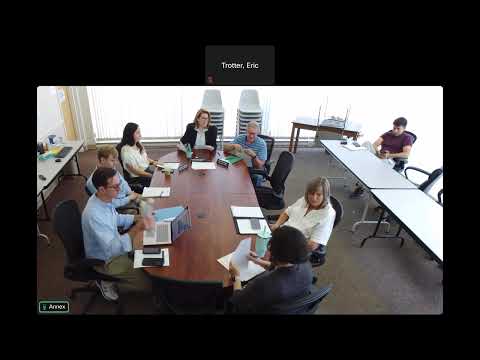
Planning staff presented an overview of a draft Unified Development Ordinance for the City of Elkhart at the Aug. 28 meeting, describing changes intended to consolidate zoning and subdivision rules, clarify standards, and introduce new building types and administrative processes.
The presenter said the UDO is intended to implement the city’s comprehensive plan and noted that the UDO combines multiple code sections (zoning, subdivision, historic preservation, floodplain) into one unified document. “The comprehensive plan serves as the policy foundation for the unified development ordinance,” planning staff said. “A UDO combines a series of different codes into one code so there's more consistency between regulations.”
Key changes described in the presentation included consolidating zoning districts (from 15 to 9), reorganizing regulations into four overarching sections (uses; building types and standards; overlay districts; development standards), adding clear rules of measurement, and introducing building typologies and graphic-rich guidance to reduce nonconformities and improve clarity for applicants. The draft also proposes a hearing officer process to allow an assigned staff person to hear minor variances and minor deviations, with the stated intent of speeding routine decisions.
Staff said the draft adds modernized parking standards with flexible credits and electric vehicle provisions, updates landscape and buffering standards (including perimeter tree planting adjustments and irrigation requirements for commercial projects over 1 acre), clarifies sign-area calculations and temporary-sign rules, and consolidates administrative procedures. The draft also includes options for cluster development, cottage courts, and other building types to enable a broader range of housing choices described in recent sub-area plans.
Planning staff described an early methodology using GIS analysis and box-plot comparisons to set dimensional standards chosen to minimize nonconforming lots (for example, changing a district lot-width standard from 75 feet to 60 feet reduced vacant-lot nonconformity from 21% to 10%, according to staff examples shown).
Staff said the draft is online at cityofelkhartudo.com (presenter spelled as provided at the hearing) and that the most recent draft is still fluid; staff expects to present the ordinance to the planning commission in October and to complete legal drafting and repeal of prior ordinances before formal adoption, likely before the end of the year if the schedule holds. Training for boards, staff, developers, and the public was promised as part of implementation.
Questions from members at the meeting touched on the historic/conservation district integration (staff said the local historic preservation body will move from a designated local historic district to a conservation district and that a few special commission meetings would be needed to finish related details) and on fence standards (staff said the UDO will align with state standards). Staff said the document will be periodically updated after adoption (semiannual or annual reviews) to correct items that reoccur in practice.
Staff emphasized the UDO’s user-focused design: a hyperlinked digital version, a robust table of contents, clear flowcharts for the development review steps, and graphics meant to make the code easier for applicants and staff to use. The presenter said the consolidated code is intended to produce a more predictable and understandable review process for property owners and developers.
Next steps
- Draft posted online; staff to continue revisions and legal drafting. - Anticipated planning commission review in October; formal adoption expected after legal review and repeal of prior ordinances. - Training sessions for boards, staff, developers, and the public to follow adoption.
The presentation was an informational item; no formal board action on the UDO was taken at the meeting.