Get Full Government Meeting Transcripts, Videos, & Alerts Forever!
Get email alerts on the Contract Law City Contracts topic
No spam. Unsubscribe anytime.
Elkhart adopts ordinance barring certain liability‑limiting and indemnity clauses in city contracts
Summary
The council adopted the Elkhart Contractual Protections Ordinance to prohibit limitations of liability and indemnification terms in future contracts with the city, aiming to preserve remedies under Indiana law, Corporation Counsel said.
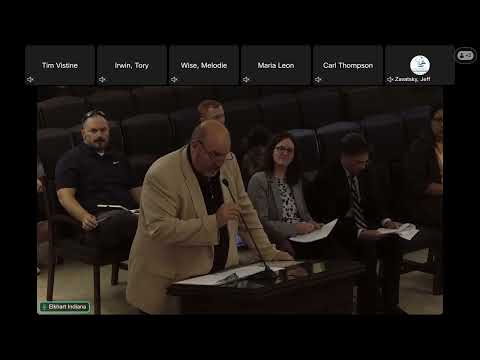
The Elkhart City Council unanimously adopted an ordinance that prohibits certain limitation‑of‑liability and indemnification clauses in contracts with the city, Corporation Counsel John Espord told the council during the ordinance presentation.
Espord said the proposed ordinance, 25‑0‑29, addresses provisions increasingly appearing in vendor contracts that attempt to cap a contractor’s liability at the contract price or to require the city to indemnify the contractor. He gave examples ranging from playground equipment defects to software that could expose confidential information and said such contractual language can leave the city and residents without a remedy commensurate with actual damages.
“Proposed ordinance 25‑0‑29 seeks to address two contractual provisions that have appeared with increasing frequency,” Espord said. “Those provisions attempt to limit the liability of the contracting party with the city or to require indemnification that would shift responsibility to the city.”
Espord told council members the ordinance would not be retroactive and would apply only to future agreements with the city; it is intended to restore established principles of Indiana negligence and contract law when parties negotiate remedies for foreseeable losses.
Council members asked whether vendors or suppliers might refuse to do business with the city because of the ordinance and whether other municipalities had adopted similar non‑public‑works measures. Espord said the state has already prohibited such provisions in certain public‑works contracts and that vendors often accept local rules when they are told up front; he said he had not identified another Indiana municipality that had adopted a similar broad ordinance for non‑public‑works contracts.
The ordinance passed on roll call vote; the clerk recorded unanimous support during the final reading and adoption (vote recorded as 9‑0). Espord said the ordinance will provide consistency for legal review and reduce time spent negotiating around such clauses on a contract‑by‑contract basis.
The ordinance takes effect for future contracts; Espord said it would not alter existing agreements.