Get Full Government Meeting Transcripts, Videos, & Alerts Forever!
Get email alerts on the Sewer District topic
No spam. Unsubscribe anytime.
Marshall County Council votes 6-1 that regional sewer district is not "economically feasible," urges IDEM to dissolve it
Summary
The Marshall County Council approved a resolution finding the Marshall County Regional Sewer District not economically feasible and asking the Indiana Department of Environmental Management to dissolve the district after public comment and debate over cost estimates, debt and oversight.
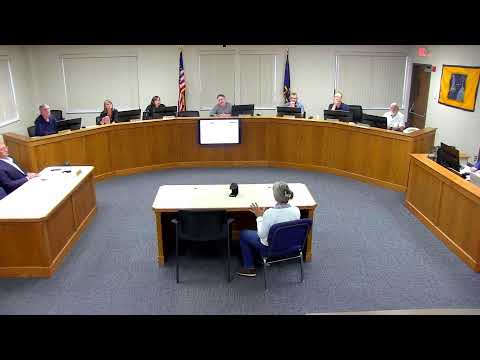
The Marshall County Council on Aug. 27 approved a resolution declaring the Marshall County Regional Sewer District not economically feasible and asked the Indiana Department of Environmental Management to dissolve the district, voting 6-1 on the measure.
Council members and dozens of residents spent the meeting debating consultant estimates, potential monthly user charges, alternatives for failing septic systems and whether the district had followed legal or advisory requirements. Supporters of the resolution said projected costs and outstanding debts risked placing homeowners into foreclosure; opponents and district supporters urged continued work to secure loans or grants.
The resolution, presented as Resolution 2025-10, cites recent consultant estimates that ranged widely and states engineers said monthly user charges could rise “to $400 per month” when construction and financing are finalized. Council members and residents referenced earlier low-end estimates of $75–$85 per month, JPR’s more recent estimates of about $150–$200 per month, and a Baker Tilly estimate that appeared on the higher end of the range. The text read into the record also cited state law (IC 13-26-2-3) as relevant to the district’s obligations.
Multiple residents described the practical consequences of the district’s financing model. Bill Woodward of Peach Road criticized the enforcement approach he described from prior sewer-district meetings, saying in public comment: "Then they go to court and they take your house for not paying the fine." Woodward said the district’s attorney had described a process of assessing fines for noncompliance and pursuing judicial remedies that can lead to loss of property. The council’s resolution also incorporated language read at the meeting noting the possibility of foreclosure or similar loss of homes if homeowners cannot afford the charges or assessments.
Speakers and speakers’ representatives questioned whether the sewer board had formed a statutorily required three-member advisory panel and faulted the district’s use of high-cost consultants. Residents and some council members said the district has incurred approximately $1.3 million in debt and pointed to a bond amount of roughly $3,075,000 that is scheduled to come due in 2027. Testimony and public comment also described consultant billing rates (one consultant’s invoices noted $525 per hour plus travel and mileage) and the risk that rising construction bids could push the project cost above earlier estimates.
Several residents and speakers offered alternatives to a full countywide sewer system, including smaller-scale repairs or replacement of failing septic systems and privately offered “drop-in” or aerobic system fixes. One commenter said companies could inspect problem systems and in many cases repair them for several thousand dollars rather than the tens of thousands projected for a full sewer connection. Proponents of those alternatives said grants and low-interest SRF loans had not been applied for or secured by the district as represented at public meetings.
Council member Patterson moved to adopt Resolution 2025-10; Council member Shattuck seconded. The clerk conducted a roll call and the motion passed 6–1. The resolution requests that IDEM dissolve the Marshall County Regional Sewer District and records the council’s finding that the district is "not economically feasible, fair, or reasonable" given the higher projected costs and outstanding indebtedness.
The council allowed additional public comment after the vote. Residents reiterated concerns about the financial risk to homeowners and called for more transparency, more communication between the district and county officials, and exploration of lower-cost alternatives. Council members said the decision reflected the risk assessment presented at the meeting and the council’s responsibility to the county’s taxpayers.
Votes at a glance: Resolution 2025-10 — Adopt resolution finding the Marshall County Regional Sewer District not economically feasible and urging IDEM to dissolve the district; motion by Council member Patterson; second by Council member Shattuck; outcome: approved, 6 yes, 1 no.
The county did not vote on rescinding the district itself; the resolution asks IDEM to act. Council members and public commenters said the district’s records, consultant studies and budget documents now should be made available to the county for review, and several speakers recommended pausing further district spending until funding and scope questions are resolved.